Online Violin Lessons for Chinese Families Abroad: Paying
Shang Kun 2026-11-29 150
Online violin lessons for Chinese families abroad usually cost USD 25–60 for a 30–45 minute lesson, and USD 60–120 per lesson when the teacher has a conservatory background. Monthly totals tend to land between USD 120 and USD 400 depending on how often your child takes class. Those are the numbers I hear most from parents in California, Vancouver, London and Singapore, and they are the numbers this page works from.
Prices swing for real reasons. A teacher who trained at a Chinese conservatory and has ten years of studio teaching behind them charges more than a graduate student building a private studio. A 45-minute lesson costs more than a 30-minute one, and a slot at 8pm Beijing time costs more than a Tuesday morning slot nobody wants.
At Shang Kun Violin (Beijing), our online lessons sit inside that range. We are a Beijing studio with in-person classes in the city and online students across time zones. Nothing here is a sales pitch for one price point. It is a breakdown of what you are actually buying, what to watch out for, and what a first year realistically costs.
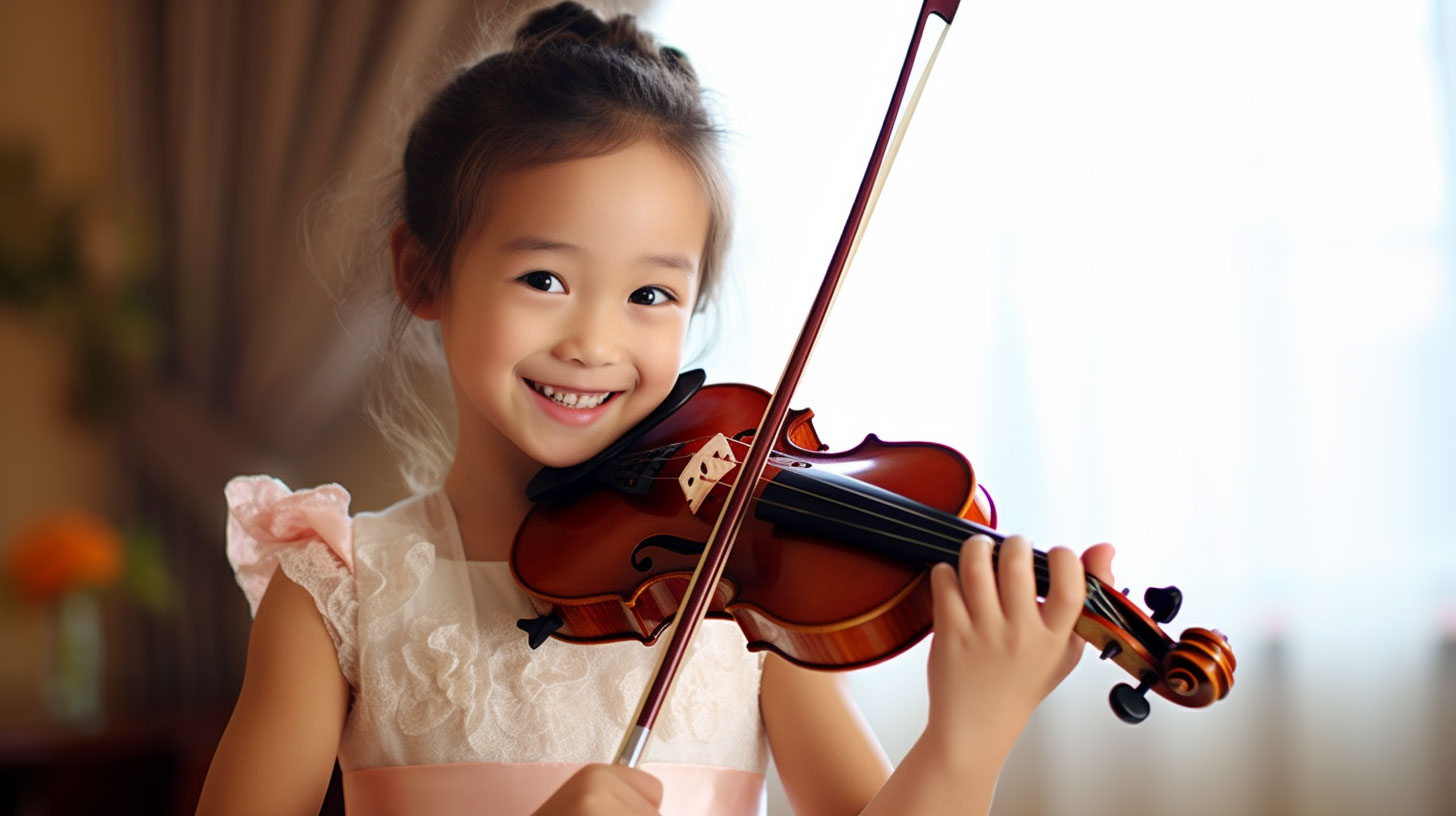
What does an online violin lesson cost for a Chinese family abroad?
Four tiers, roughly.
Entry tier: USD 25–35 per 30 minutes. Usually a student teacher, a recent graduate, or a platform instructor with a standard script. Fine for a first taste. Weak on diagnosing posture problems.
Working tier: USD 35–60 per 30–45 minutes. A teacher with a music degree, several years of studio experience, and a steady roster of young students. This is where most overseas Chinese families land.
Conservatory tier: USD 60–120 per lesson. A teacher who studied at a conservatory, often with competition or orchestra experience, and who can prepare a student for ABRSM or a youth orchestra audition.
Studio tier: USD 120 and up. Rare in online format. Usually a well-known teacher with a waiting list.
Families taking one lesson a week spend USD 100–480 a month. Families taking two lessons a week spend USD 200–900. Most of our overseas families sit at USD 150–400 monthly, which buys one or two lessons a week plus practice feedback between sessions.
What actually drives the price up or down?
Teacher training and track record
A teacher's CV moves the price more than anything else. Conservatory training in China, a degree from a European or American school, ABRSM certification, years spent teaching children specifically. Ask what they studied, where, and how long they have taught kids under twelve. A teacher who mainly performs and teaches adults part-time will charge less than a full-time children's teacher with a waiting list, and the children's teacher is usually worth the difference.
For a closer look at how to read a teacher's background before you commit, see our guide on how to choose a violin teacher for my child. It walks through the questions that separate a good fit from a good salesperson.
Time zone and scheduling
A lesson at 7pm Eastern Time is 8am in Beijing. Someone has to get up early. Teachers who reserve early morning or late night slots for overseas students often add USD 5–15 per lesson. Some don't, and that is a real difference over a year.
Ask directly: is there a time-zone surcharge, and does the price change if you book a slot in the teacher's normal working hours?
Lesson length
Thirty minutes is standard for ages five to seven. Forty-five minutes suits ages eight to twelve. Sixty minutes for teenagers preparing for exams. The per-minute price usually drops as length rises, so a 45-minute lesson at USD 55 can be better value than a 30-minute lesson at USD 40.
For children under eight, shorter and more frequent beats longer and rarer. Our notes on when a child should start violin lessons explain why attention span should drive the schedule, not the price list.
Practice feedback between lessons
Some teachers charge only for the live session. Others include a weekly check of a practice video: your child records two minutes, the teacher sends back notes by voice message. That feedback is worth USD 20–40 a month in most markets, and it is the single biggest reason children progress between lessons.
If a teacher offers it, ask whether it is included or billed separately. If it is not offered at all, factor in the risk of a week of practice going in the wrong direction.
Materials and platform costs
Most teachers send PDFs of scales and études, so books may cost USD 30–60 in the first year. A clip-on tuner and a music stand add USD 30–50. Zoom, Tencent Meeting and Google Meet are free. Add roughly USD 60–100 in year one for these extras.
Three cost traps that catch overseas Chinese families
Trap one: paying for a big package before a trial
A studio offers twenty lessons for USD 900, a 25 percent discount. The teacher turns out to be a poor match, and refunds are written into a contract you did not read closely. Now you are stuck or fighting for money back across time zones.
Book one paid trial first, at the normal rate, with no package attached. A single 30-minute session tells you more than a brochure. If the teacher insists on a package before any trial, walk away. Reputable studios do not need that.
Trap two: ignoring currency and transfer fees
A USD 50 lesson paid through an international transfer can carry USD 15–25 in bank fees, and exchange rates add another 1–3 percent. Pay monthly and the fees compound.
Pay in the currency the teacher quotes, through a method that keeps fees under 3 percent: a card processor, a payment app, or a service like Wise. Confirm who absorbs the fee before the first payment. Some teachers quote a price and then ask you to cover transfer costs, which quietly turns a USD 45 lesson into USD 53.
Trap three: buying an instrument before the first month
A parent buys a USD 600 violin in week one, the child loses interest in week six, and the instrument sits in a corner. Or the child is a left-hander, or needs a quarter-size, and the purchase was wrong from the start.
For the first month, rent. A quarter-size or half-size rental runs USD 20–40 a month in most Western cities, sometimes with rent-to-own credit. Once your child has taken eight lessons and still wants to continue, buy. Our piece on when a child should start violin lessons covers size fitting and readiness signs in detail.
A realistic first-year budget for overseas Chinese families
Take a nine-year-old in Toronto, one 45-minute lesson a week at USD 50, practice feedback included, paid monthly. Here is year one:
Lessons: 44 weeks × USD 50 = USD 2,200. That is the dominant cost by far.
Rental for the first two months: USD 70. Then a half-size violin bought outright at USD 350, with a case and bow.
Books, tuner, music stand, spare strings: about USD 130.
Two extra lessons before a recital: USD 100.
Year-one total: roughly USD 2,850, or USD 235 a month.
Cut weekly lessons to 30 minutes at USD 35 and the same year comes in near USD 1,800. Take two lessons a week at USD 60 and it climbs past USD 5,500. The lesson rate matters less than frequency and whether you stop and restart.
How to cut the cost without hurting progress
Choose a schedule you can keep
One lesson a week for fifty weeks beats two lessons a week for two months, then nothing for a season. Consistency is the cheapest accelerator there is. A child who practices twenty minutes five days a week on a steady schedule progresses faster than one with double lessons and no routine.
Our guide to how often a child should practice violin has a fixed-slot method that keeps the weekly rhythm intact without extra spend.
Book longer, less often, for older kids
A twelve-year-old does better with one 60-minute lesson than two 30-minute sessions, if the teacher can hold attention. Same monthly cost, less scheduling friction.
Use group or shared lessons sparingly
Group lessons cost USD 15–25 per child and can be useful for rhythm work and ensemble experience. They cannot replace individual attention for posture and bow hold. Use them as a supplement, not a substitute.
Ask for a monthly plan instead of a yearly one
Yearly prepayment saves 10–15 percent but locks in a teacher you have only met twice. Start monthly. If the match holds after three months, ask for the discount then.
Keep the instrument rental through year one
Children grow out of fractional sizes every twelve to eighteen months. Renting through year one, then buying the next size, soaks up the uncertainty. Sell or trade in the old size when the child moves up.
More detail on sizing and rental-to-purchase timing is in our piece on violin readiness for young children.
Is a higher price always a better teacher?
No. Price tracks training and demand, not teaching ability with children.
A USD 70 conservatory-trained teacher who has never taught a seven-year-old can be worse for your family than a USD 45 teacher who has run a children's studio for a decade. What predicts progress is whether the teacher can diagnose a specific problem in one lesson, explain it in words your child understands, and give practice instructions precise enough to follow alone.
Use a trial to test exactly that. Ask the teacher to name one thing your child should fix this week and how to practice it. Vague answers at USD 30 are a worse deal than clear answers at USD 70.
Families weighing online against local in-person lessons in a high-cost city often find online wins on both price and consistency. Our comparison of whether online violin lessons work for kids runs through six checks you can apply in the trial itself.
How payment and scheduling usually work
Most Beijing-based teachers who serve overseas families bill monthly, in USD or RMB, with a 24-hour cancellation window. Lessons run on Zoom or Tencent Meeting, recorded with permission so your child can rewatch. Make-up lessons for illness are common; make-ups for missed practice are not.
Expect a short intake: age, instrument size, any prior lessons, and a video of your child playing or holding the violin if they have started. A good studio replies within two working days and offers two or three trial slots.
If you are still in the search stage, our checklist for finding an online violin teacher for Chinese students covers the practical questions to send by email before booking.
Questions parents ask about price
Q: Is USD 30 per lesson too cheap to be good?
A: Not automatically. A student teacher or a recent graduate building a studio may charge USD 30 and still teach well, especially for a beginner's first six months. Check training, experience with children, and whether practice feedback is included. What matters is that the teacher can spot and correct basic posture and bow issues before they harden.
Q: Should I pay monthly or per lesson?
A: Monthly is standard and usually cheaper per lesson. Per-lesson payment has its place for the first four weeks while you test the fit. Once you are confident, switch to monthly and keep a 24-hour cancellation policy in writing.
Q: Do I need to buy a violin before the first lesson?
A: No. Rent for the first month. Your child may need a different size after the teacher sees them play, and interest is not proven until week six or so. Renting costs USD 20–40 a month in most cities and avoids a wasted purchase.
Q: How much should I budget for the first year?
A: With one 45-minute lesson a week at USD 50, plus instrument, books and a couple of extras, plan for USD 2,500–3,000. At USD 35 for 30 minutes, USD 1,700–1,900. Two lessons a week pushes past USD 5,000.
Q: Do teachers charge extra for time zones?
A: Some do, typically USD 5–15 per lesson for early morning or late night slots. Ask before booking. Teachers with a steady overseas roster often build those hours into their standard rate.
Q: Are group lessons worth the lower price?
A: For rhythm, listening and ensemble experience, yes. For posture, bow hold and tone, no. Treat group lessons as a supplement and keep at least one individual lesson a week if you can afford it.
Q: What if my child wants to quit after three months?
A: Three months is often the hardest stretch, before the first piece sounds like music. Before quitting, change one variable: shorter lessons, a different time slot, or a different practice routine. Our guide to practice slots for children is a practical place to start.
Q: Can I get a refund if the teacher is a poor match?
A: Only if the policy says so before you pay. Ask in writing. A fair studio offers a refund on unused lessons within the first month, or a free switch to another teacher. Get that in the first email.
Related reading
Choosing a violin teacher around the school term explains how to align lesson schedules with a busy academic calendar.
Online violin lessons for adult beginners covers pricing and pacing for parents who want to learn alongside their child.
Setting up a practice space at home lists the inexpensive items that make daily practice easier.
Seven questions to ask an online violin teacher is a short pre-booking checklist.
Shang Kun Violin (Beijing) has our studio details, teacher profiles and booking process.