When Should a Child Start Violin Lessons: Body Check
Shang Kun 2026-11-28 65
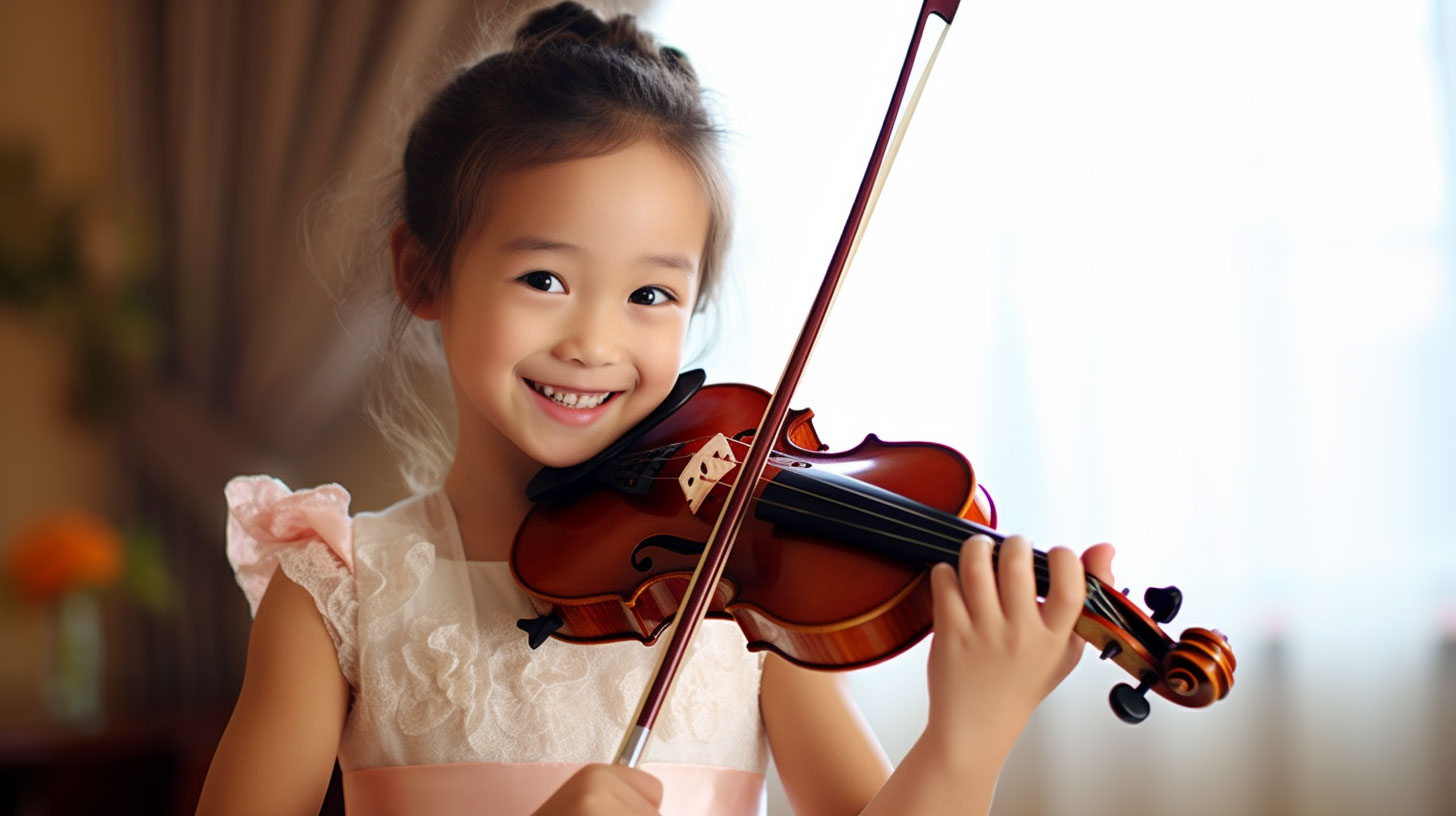
When should a child start violin lessons? Most children can begin formal lessons at 5-7 years old, but readiness matters far more than the birth date on the passport. I have watched a six-year-old sit through a full 40-minute lesson and a seven-year-old melt down at minute eight. The difference was not talent. It was a body check. At Shang Kun Violin in Beijing, we run parents through four simple readiness signs before anyone buys a 1/8 or 1/4 instrument. If a child passes them, the start date is probably close. If not, waiting three to six months usually costs nothing.
What age do most violin teachers recommend for a first lesson?
Five to seven is the sweet spot for most teachers, and that range is not random. Around five, many children can hold a simple posture for a few minutes, copy a clapping rhythm, and accept that an adult is giving instructions. Around seven, they can handle slightly longer lessons and a bit more repetition. Before five, the nervous system and the attention span are usually still catching up. After seven, children can still start, but the first few months often move faster because they understand cause and effect better. A four-year-old is not impossible. It just looks different, and I will show you exactly how in a moment.
Four readiness signs that matter more than age
1. Can the child sit still for 15 minutes?
Not 15 minutes of silence with hands folded. I mean 15 minutes on a task they chose, like drawing or building blocks, without getting up three times. Violin lessons ask for attention in short bursts, and 15 minutes is a realistic floor for a beginner lesson. If a child cannot manage that at home, a 30-minute lesson will be a wrestling match. That is not a discipline problem. It is a timing problem.
2. Can the child follow a two-step instruction?
Try this at home: pick up the blue cup and put it next to the sink. A child who can hold two steps in mind and finish both is ready for "hold the violin up, then move the bow." Lessons are full of two-step and three-step directions. A child who loses step one halfway through step two will feel lost, and feeling lost is what makes kids quit at week six.
3. Can the child hum a tune back?
Hum four notes of a simple song and ask them to hum it back. This is not a singing test. It checks whether the ear is starting to match pitch, which makes early violin work far less frustrating. A child who can copy a short melody will hear when a note is off. That feedback loop keeps practice from turning into guessing.
4. Does the arm fit a 1/8 or 1/4 violin?
Arm length decides instrument size, not age. Hold the violin under the chin and check that the left hand can curl around the scroll without locking the elbow. If a child needs a 1/16 or smaller, they can still start with rhythm games, but formal bowing and finger placement get clumsy. At our Beijing studio we measure arm length at the first visit, and most five-year-olds land on a 1/8, while most seven-year-olds fit a 1/4.
What does a lesson for a 4-year-old actually look like?
Ten minutes of rhythm games, then a break. That is the honest shape of it. We clap patterns, march to a beat, echo short phrases, and maybe touch a violin for two minutes. There is no pressure to hold the instrument, no bow, no scales. The goal is that the child leaves curious instead of tired. Parents sometimes ask why they are paying for a lesson without an instrument in hand. The answer is simple: a four-year-old who learns to keep a beat and copy a phrase will learn violin technique faster at six. If you want to see how this play-first approach fits a longer plan, read our guide on when a child should start violin lessons with readiness first, which breaks down the same signs from a teacher's side.
Why starting at 9 or 10 is not too late
It is not too late. In some ways it is easier. A nine-year-old can read a practice chart, understand why the elbow matters, and sit through a 45-minute lesson without a snack break. The trade-off is time. A child starting at five gets roughly four extra years of small, low-pressure exposure, which adds up in ear training and comfort with the instrument. A child starting at nine moves faster per month but has fewer total months before the teen years get busy. Neither path is better. They are different shapes. I have seen ten-year-olds pass younger students within a year because they practiced with intention instead of being carried by a parent. The one thing a nine-year-old needs is a teacher who will not baby the lesson content.
What should parents do in the three months before the first lesson?
Three things, and none of them require buying an instrument. First, play violin music at home, not as a lesson but as background noise, so the sound is familiar. Second, practice sitting through a short task together, building up to 15 minutes. Third, get an arm measurement at a shop or studio, because a wrong-size violin is the fastest way to make a child hate playing. Our studio in Beijing does measurements free by appointment, and a proper 1/8 or 1/4 student violin with bow and case typically runs 1,200 to 3,500 RMB at local shops, while a rental costs about 100 to 200 RMB a month. If you are still deciding between group and private lessons, our notes on choosing a violin teacher for your child cover the questions to ask before you commit.
When the answer is wait
Wait if the child cannot sit through 10 minutes of a preferred activity, cannot copy a two-step direction, or needs an instrument smaller than 1/8. Wait also if the child is going through a big change like a new school or a new sibling, because adding a new routine on top of that is a lot. Waiting three to six months is not a setback. It is a cheaper decision than starting, quitting at week eight, and spending a year convincing the child to try again.
How do I know if my child is ready for a 30-minute lesson?
Q: My daughter is five and a half and can draw for 20 minutes. Does that mean she is ready?
A: It is a good sign. Try a 30-minute trial lesson and watch her face at minute 20, not minute 5. If she is still tracking the teacher, book a term. If she is sliding off the chair, try 20-minute lessons for a few months.
Q: Is four years old too early for violin?
A: Too early for formal bowing and note reading, usually. Not too early for rhythm games and ear work. Look for a teacher who runs short, play-based sessions and does not force instrument hold. If the teacher insists on a 45-minute traditional lesson for a four-year-old, keep looking.
Q: Does my child need to be able to read music before starting?
A: No. Beginner violin teaching at this age is mostly listening, copying, and small physical habits. Note reading gets added gradually, often through games and short cards. A child who cannot read letters yet can still start violin.
Q: What size violin does a six-year-old usually need?
A: Most six-year-olds fit a 1/8, some fit a 1/4, and a few small six-year-olds need a 1/10. Measure arm length rather than guessing by age. A shop can do it in two minutes, and the wrong size makes posture problems that take months to undo.
Q: My child is nine and wants to start. Are private lessons better than group?
A: At nine, private lessons usually move faster because the teacher can fix specific habits. Group lessons are cheaper and more social. If the goal is steady progress, start private for the first term, then add a group ensemble later for fun. Our article on the five readiness signs for starting violin goes deeper on matching lesson format to the child.
Q: How long should we try before deciding it is not working?
A: Give it one full term, about 12 to 16 weeks, with consistent practice. If the child still dreads the lesson after a term, talk to the teacher before quitting. Sometimes the fix is a shorter lesson or a different time slot, not a different instrument. For practice structure at home, this guide on how often a child should practice violin has a workable weekly plan.
Q: Can online lessons work for a young beginner?
A: For five and six-year-olds, in-person is easier for posture, because a teacher needs hands on the shoulder and elbow. From about seven, online lessons work well if the home setup is decent. Our team at Shang Kun Violin teaches both in Beijing and online, and we usually suggest a mix: in-person for the first month, online after the basics settle.