How to Find an Online Violin Teacher for Chinese Students
Shang Kun 2026-11-27 160
Finding an online violin teacher for Chinese students who live abroad looks easy until you actually try it. Search results are endless, profiles all sound confident, and every teacher claims to have taught "many overseas Chinese children." The hard part is not finding a teacher. The hard part is verifying one remotely, before you pay for a term.
I have watched this go wrong many times. A family in Toronto books a teacher based in Shanghai, pays for ten lessons in advance, and discovers in week three that the camera angle only shows the teacher's face, not the bow arm. Or the child cannot understand corrections because the teacher switches between Mandarin and English mid-sentence. Money is gone, and the child's enthusiasm has cooled.
So here is a working method, written for parents and adult learners who need to judge a teacher through a screen.
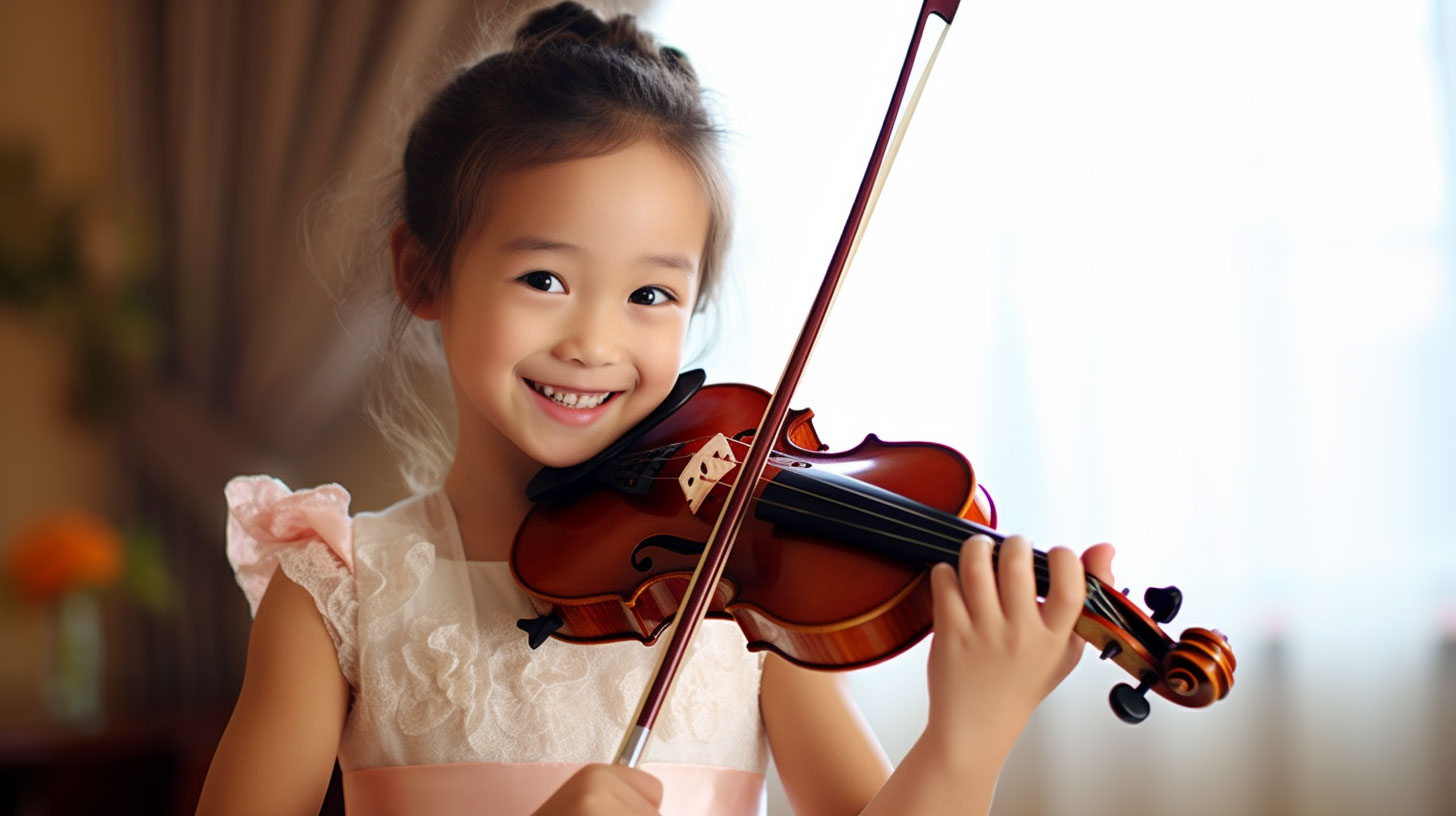
Why verification matters more than search results
When you live in the same city as your teacher, you can visit the studio once and learn a lot. You see how the teacher talks to your child. You see whether the room is set up for teaching. You hear the tone of the instrument.
Online, all of that information is filtered through a video call. A teacher can look excellent on a homepage and still be a poor fit for a seven-year-old who needs someone to say "lift the elbow" in a way the child actually understands.
So do not shop for a teacher the way you shop for a product. Verify. Four checks below do most of the work.
Check one: ask for a recorded sample lesson
Not a performance video. Not a promotional clip with background music. A sample lesson, ideally ten to twenty minutes, showing a real student at a similar level.
What you are watching for is simple. Can you hear the teacher? Can you see the student's hands and bow arm? Does the teacher stop the student and correct something specific, then have the student try again? A teacher who only plays beautifully and says "very good" is not teaching in that clip.
If a teacher refuses to share any recorded material, treat that as information. Some teachers protect student privacy, which is fair. In that case ask for a short demonstration lesson with your own child, paid at the normal rate, before any term commitment. A willingness to do one trial lesson is a reasonable request. A refusal to do either is a warning sign.
Check two: a clear term plan with repertoire
Ask a simple question: what will my child be able to play in twelve weeks?
A serious teacher answers with specifics. Something like: pieces from Suzuki Book 1, plus scales in G and D major, plus a short bowing exercise. A vague answer such as "we will build a solid foundation" tells you nothing and suggests the teacher has not planned past the first lesson.
Also ask which method the teacher follows and why. Suzuki, ABRSM-oriented preparation, or a Chinese conservatory route each carries different assumptions about reading music, ear training, and exam pressure. None is automatically better, but a teacher should be able to explain the choice in two sentences. If the answer is only "we will see how it goes," the teacher is improvising.
For families weighing online lessons against local ones, our guide to whether online violin lessons are effective for kids walks through the same six-point check in more detail.
Check three: time zones and rescheduling policy in writing
This is where remote lessons quietly fall apart. A child in Vancouver and a teacher in Beijing sit fifteen or sixteen hours apart depending on daylight saving. Someone is always teaching at an awkward hour.
Before you pay, get four things in writing: the fixed weekly slot in both time zones, how much notice is needed to reschedule, what happens if the teacher cancels, and whether missed lessons expire or can be carried over.
Fair policies exist in several forms. Some teachers allow one free reschedule per month with 24 hours' notice. Some charge for no-shows but will make up a lesson if a child is genuinely ill. What matters is that the terms are stated before money moves, not discovered later.
Pay attention to daylight saving changes too. Twice a year, a slot that worked in March shifts by an hour in November. A teacher who has handled overseas students before will mention this without being asked.
Check four: a way to send weekly recordings for feedback
One or two live lessons a week is not much contact time. The students who progress fastest are the ones who send short practice recordings between lessons.
Ask how the teacher handles this. A good answer is concrete: send a two-minute video by Friday, feedback arrives by Sunday, either as a voice note or as written notes. A weak answer is "just message me anytime," which usually means the teacher is too busy to respond consistently.
This matters because a teacher watching a live lesson sees a child once. A teacher watching a weekly recording sees the actual practice habits. Posture problems show up clearly in a recording made at home.
What to watch in the first two weeks
The trial period is for gathering evidence. Ignore whether the child "likes" the teacher for now. Liking comes fast and fades fast. Watch three things instead.
Is the camera angle usable?
By week two, the teacher should have told you exactly where to place the laptop, at what height, and how to light the room. If you are still tilting the screen mid-lesson and the teacher cannot see the bow contact point, the setup has failed. That failure will slow every future lesson. Many experienced teachers send a one-page setup guide with a photo of a correct desk arrangement before the first class.
Does the teacher correct posture in language the child understands?
Watch a correction happen. A strong teacher notices a collapsed left wrist and says something a nine-year-old can act on, like "make your hand tall like a house." A weak teacher says "wrist position is incorrect" and moves on.
This is also where language matters. If your child's Chinese is stronger than English, a bilingual teacher gives clearer corrections at the start. That is real value. But do not let translation become a crutch. Standard Italian terms for tempo and bowing, such as adagio, allegro, legato, and staccato, appear in every score your child will ever read. The teacher should introduce them in the first months, in either language, and use them consistently.
Is the homework specific enough to act on?
"Practice this piece" is not homework. "Play bars 1 to 8 slowly with a metronome at 60, then record it and send it" is homework. By the end of week two, your child should be able to repeat the assignment without checking a message. If not, ask the teacher to write assignments down after each lesson. Parents of young children should receive that note too. Our outline of a twenty-minute practice routine for children is built around this kind of concrete task.
Language: bilingual help versus standard terms
Be practical here. For a six-year-old born abroad whose Mandarin is conversational but not academic, a teacher who can explain in Chinese saves months of confusion. There are plenty of capable bilingual teachers in Beijing, Shanghai, and Taipei who teach online for exactly this reason.
For a twelve-year-old already comfortable in English, language is less of a factor. The larger question is whether the teacher's own musical vocabulary is standard. A teacher who says "play it sweeter" without ever naming the dynamic marking is limiting the student.
Shang Kun Violin is based in Beijing and teaches in both languages, which is why many overseas Chinese families start here. That is one option among many. The test above still applies to us and to everyone else.
What online violin lessons cost
Prices vary by teacher training and reputation. For a forty-five to sixty minute online lesson with a competent teacher, expect 120 to 250 RMB. Teachers trained at a conservatory, with competition or orchestra background, sit at the upper end, roughly 200 to 250 RMB and sometimes above. A student teacher or a recent graduate may charge 100 to 150 RMB, which can be fine for a beginner.
A reasonable starting arrangement is a package of four lessons, not twelve. Four lessons cost about 500 to 1,000 RMB and give you enough evidence to decide. Do not pay for a full term before the camera angle and the language fit are proven.
Our fee map for online violin teachers for Chinese students breaks these ranges down by city and teacher background.
Questions from parents and adult learners
Q: How many online lessons a week does a beginner need?
A: One lesson a week is standard for beginners. Young children benefit from one lesson plus a short parent-guided practice check midweek. Two lessons a week only makes sense when practice time is already consistent, otherwise there is nothing new to teach.
Q: Can a child learn violin entirely online from the very first lesson?
A: Yes, if the setup is right. You need a stable connection, a camera that shows the bow arm, and a parent present for the first few months with a young child. The first lessons are about holding the instrument and the bow, and those are easier for a parent to help with in person than a teacher can manage over video.
Q: My child speaks English at school and Chinese at home. Which language should the lesson be in?
A: Start in the language your child thinks in when frustrated, usually the home language. Switch gradually to English over the first term if the goal is an English-language music environment. Ask the teacher to introduce Italian tempo and bowing terms from the first month regardless.
Q: What internet speed or equipment do we actually need?
A: A stable connection of at least 10 Mbps upload is enough for video calls. Use a laptop rather than a phone, place it at instrument height so the bow arm is visible, and add a clip-on light if the room is dim. A wired connection or a good router close to the desk prevents most dropouts.
Q: How do I know if my child is making progress with an online teacher?
A: Ask for a short recording at the start of each month. Compare tone, posture, and the number of pieces played cleanly. A teacher who cannot produce that comparison is not tracking progress either. Our five-day practice routine for children gives families a simple weekly structure to judge against.
Q: Should I pay the full term upfront if the teacher offers a discount?
A: Pay for four lessons first. A ten percent discount is not worth losing a thousand yuan and three months if the fit is wrong. After four lessons, if the camera angle, the corrections, and the homework all work, paying a term in advance is reasonable.
Q: What if we move countries during the school year?
A: Tell the teacher before you pay. A teacher experienced with overseas families can usually shift the slot within a week or two if the time difference changes by only a few hours. A move from Toronto to Sydney, however, is a large shift. Get the policy in writing before you commit.
Shang Kun Violin teaches online from Beijing to families across North America, Europe, and Australia. If you want a trial lesson to test the camera setup and the language fit, contact us through the main lesson page.