How Often Should a Child Practice Violin: 5 Slots
Shang Kun 2026-11-28 200
How often should a child practice violin? Five short sessions of 15 to 20 minutes beat one 90-minute session. That is the short answer, and it holds for almost every beginner I have taught at Shang Kun Violin in Beijing. A young child's attention window is short, and the fingers, bow arm, and ears all learn better in small repeated doses than in one long grind. So the real question is not how to find a big block of time, but how to place five small slots into a normal week.
Why five short sessions win over one long one
I have watched a lot of home practice. The 90-minute Saturday session usually looks like this: ten minutes of tuning and chatter, twenty minutes of playing, thirty minutes of frustration, and thirty minutes of a tired child holding the instrument while a parent negotiates. Almost none of that is practice. Five sessions of 15 to 20 minutes put roughly 75 to 100 minutes of focused work into the week, and the work is spread out, which is how motor memory actually forms.
The other reason is recovery. A child who plays for 90 minutes straight with a beginner bow hold will end up with a sore shoulder and a bad habit formed under fatigue. Short sessions let the body reset. If you want a deeper look at how a five-day pattern is built, the guide on violin practice routine for children five days a week walks through the same logic with a different schedule.
What a beginner week actually looks like
Here is the plan I give most families after the first month. It assumes a child aged six to nine and a parent who can sit nearby for part of the session.
Monday, Wednesday, Friday: technique slots
These three days carry the technical work. Each slot runs 15 to 20 minutes and has three parts: two or three minutes of open strings or a slow bow exercise, five to eight minutes on the current technical item (a new finger pattern, a bow change, a scale), and five minutes on the piece that uses that skill. Keep the order fixed. Children relax when they know what comes next.
Tuesday and Thursday: review plus one fun piece
These two days are lighter and more musical. Spend five to eight minutes reviewing what was learned the day before, then play one piece the child genuinely likes. It can be a folk tune, a film theme, anything. The point is that the instrument stays associated with pleasure, not only correction. If your child is still deciding whether to start at all, read when a child should start violin lessons before locking in a schedule.
Weekend: rest, or a free-play session
Saturday and Sunday are off by default. If the child picks up the violin on their own, let them. Do not turn it into a lesson. Rest is part of the training plan, not a reward for finishing it.
What counts as real practice versus holding the instrument
This is where most families fool themselves. Holding the violin for 20 minutes is not practice. Real practice has a target. Before the session starts, the child should be able to say one sentence about what they are fixing: keeping the bow straight on the A string, landing the third finger in tune, playing four clean staccato notes.
Signs that a session was real practice: the child can hear a difference by the end, the parent can name what changed, and there is a short note in a practice log. Signs that it was not: the same passage was played wrong ten times in a row, the child spent most of the time tuning or adjusting the shoulder rest, or the session ended in tears. A simple rule I use with beginners is that if you cannot describe what you worked on in one sentence, you did not practice, you just held the violin.
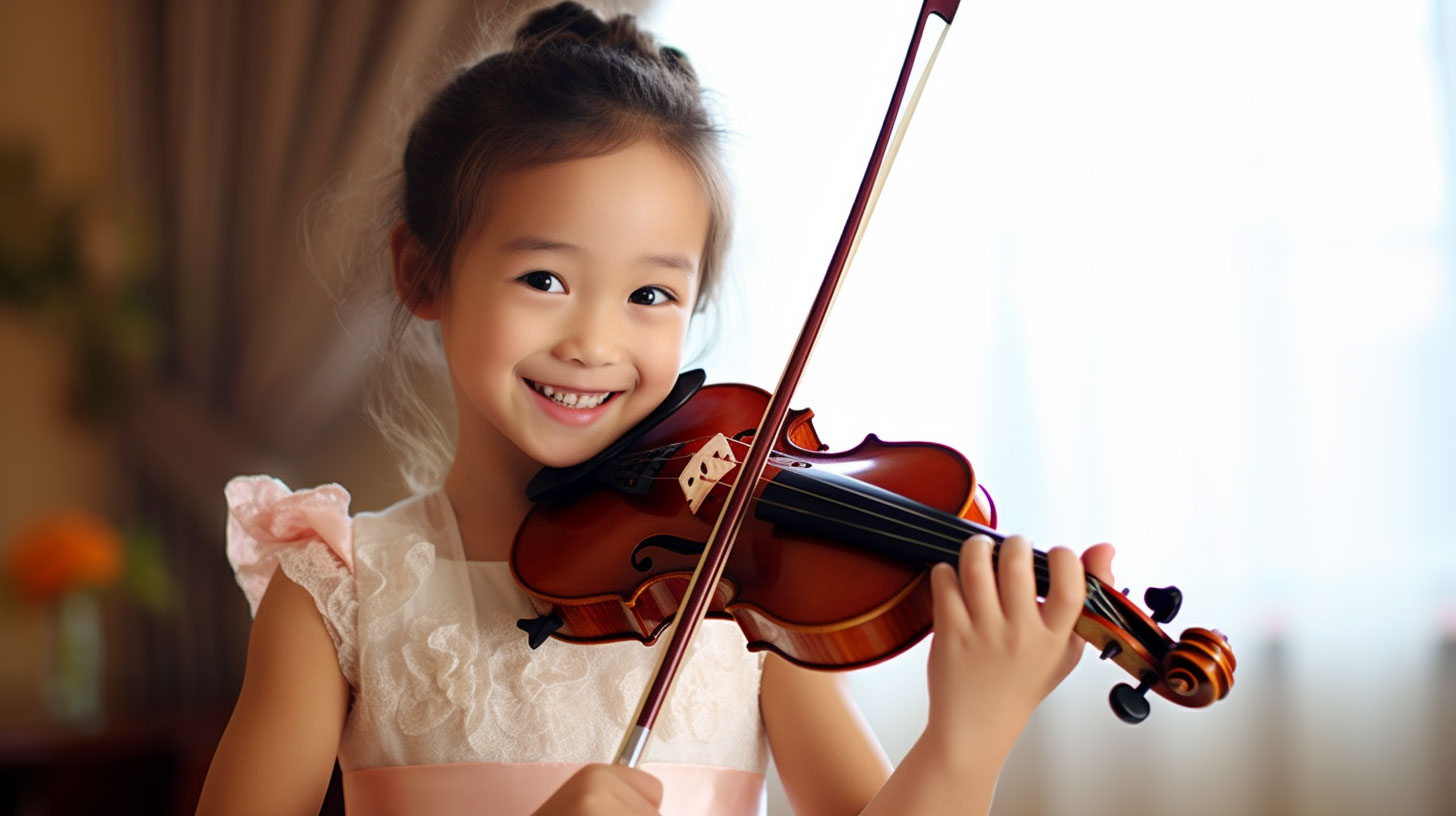
The three-day rule: why skipping three days in a row resets finger memory
Beginners lose finger memory fast. In my experience, skipping one day is fine. Skipping two days is recoverable. Skipping three days in a row, and the child comes back sounding like they lost a week. The hand has forgotten where the fingers sit, the bow arm has lost its calm, and the first session back is spent relearning instead of advancing.
That is why the Monday-Wednesday-Friday and Tuesday-Thursday structure matters more than the total minutes. It never leaves a gap longer than two days. If a family travels or a child is sick, I ask for one five-minute session on the road: open strings, no music stand, nothing serious. It keeps the contact alive. The weekly table in how often should a child practice violin shows how to shift slots around a disrupted week without breaking the three-day rule.
Apartment practice and mute use
Most of the families I teach in Beijing live in apartments, and noise is a real constraint. A violin at beginner volume is louder than people expect, especially through a shared wall. A practice mute is a reasonable tool, but use it with care. It cuts volume by roughly half and changes the feel of the bow, so it is better for the review days than for technique days.
My working rule: mute for Tuesday and Thursday review sessions and for any practice after 8 p.m., no mute for Monday, Wednesday, and Friday technique work, and never a mute during a lesson. If a neighbor has complained, talk to them with a specific time window, for example 5 to 6 p.m. on weekdays, rather than promising silence you cannot deliver. A folded towel under the chin rest area and a rug under the practice spot also soften the sound more than parents expect.
When to adjust the plan
The five-slot plan is a starting point, not a life sentence. Move to slightly longer sessions at around age ten or when the child is preparing for a graded exam. If a child is clearly thriving, add ten minutes to two of the technique days. If a child is dragging, cut a session to ten minutes rather than canceling it. A ten-minute session still counts. A canceled one does not.
One more thing I tell parents: the parent's job is to protect the slot, not to teach the content. Start the timer, sit nearby, write one line in the log, and let the teacher handle the corrections. Families who try to co-teach at home usually end up in the same argument every evening. If you are still choosing a teacher, the checklist in how to choose a violin teacher for my child will save you a term of guessing.
Q: How often should a child practice violin each week?
A: Five short sessions of 15 to 20 minutes is the default for a beginner, which lands at roughly 75 to 100 minutes of focused work per week. Three of those sessions carry technique and two carry review plus one piece the child enjoys.
Q: Is a 90-minute weekend session enough if weekdays are busy?
A: No. One long session cannot replace the repetition across days that builds finger memory. If weekdays are tight, use four sessions of 12 to 15 minutes plus one longer weekend session, and keep the gaps between sessions short.
Q: What happens if my child skips three days in a row?
A: Expect the first session back to feel like a step backward. The hand loses its sense of where the fingers sit and the bow arm loses its calm. Plan a short, easy session to re-enter rather than jumping straight into new material.
Q: Can we use a practice mute in an apartment every day?
A: Use it for review days and for late-evening practice, not for technique days and never during a lesson. A mute roughly halves the volume but also changes how the bow feels, so heavy daily use can slow bow control.
Q: How do I know if the session was real practice?
A: The child can say what they were fixing, you can hear a difference by the end, and there is one line in a practice log. If none of those are true, the instrument was held but not practiced.
Q: At what age should the schedule get longer?
A: Around age ten, or when a child starts preparing for a graded exam, sessions can move toward 25 to 30 minutes. Add time gradually, and keep at least one rest day in the week.