Online violin lessons for Chinese families abroad: 6 checks
Shang Kun 2026-11-25 91
Online violin lessons for Chinese families abroad only work when six concrete conditions are met, and you can check each of them before you pay for a term. I have taught children in Singapore, Vancouver, Frankfurt and Sydney from a studio in Beijing, and the failures I see repeat in predictable ways. None of them are about talent. They are about camera angles, language, parental time, time zones, exam systems and what happens when a violin goes out of adjustment. Work through the six checks below with your own child in mind. If four or five pass, online teaching is a reasonable bet. If two or three fail, fix them first or look for a local teacher.
Shang Kun Violin (Beijing) runs online lessons for overseas Chinese families at roughly 280–450 RMB per 45-minute lesson, with a 12-lesson term at about 3,600–4,800 RMB depending on the teacher and whether exam preparation is included. That price band is the practical starting point for the decision below.
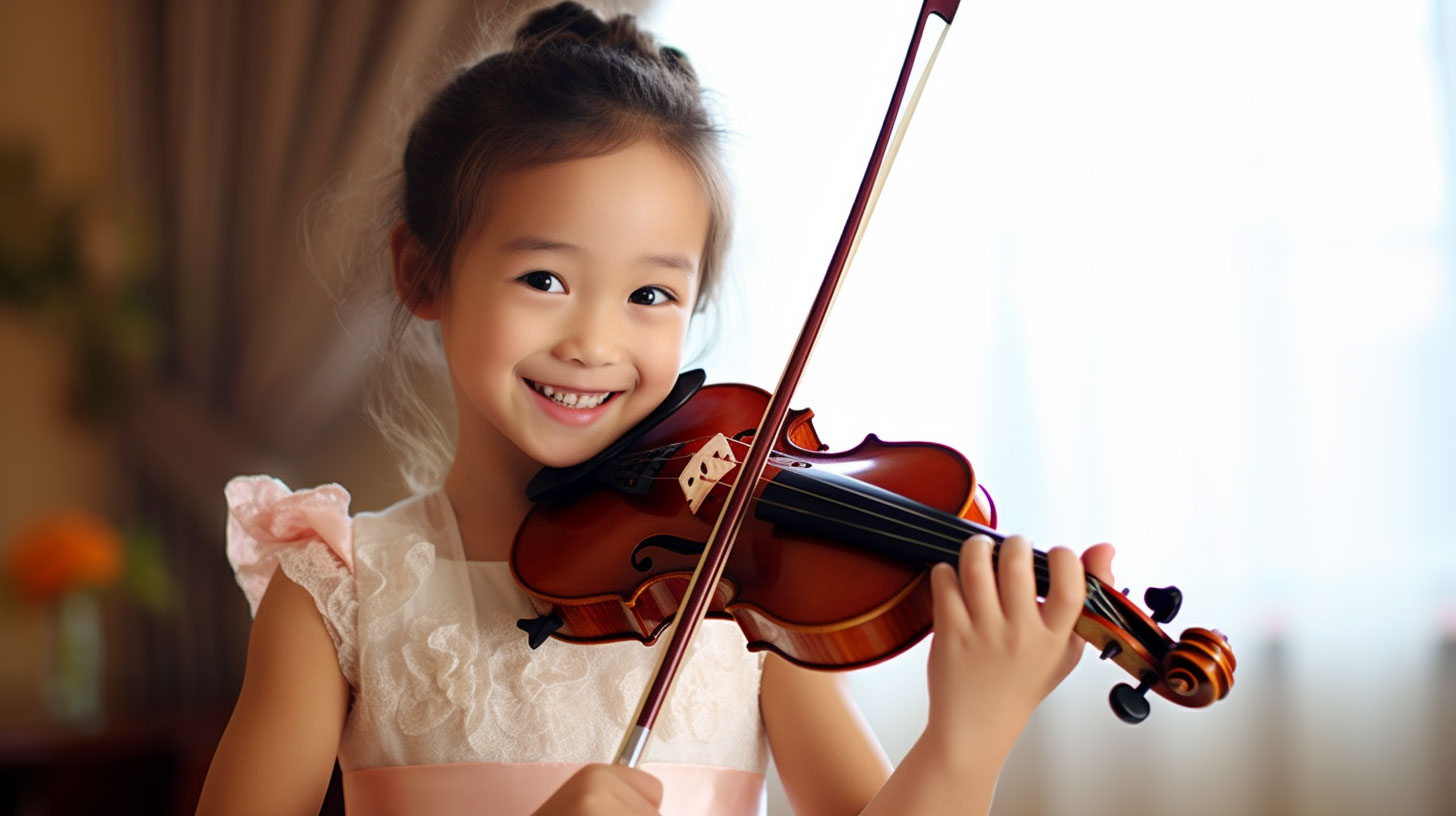
Check 1: Can the camera hold bow and left hand in frame?
This is the check most families skip, and it decides everything. A camera that shows only the child's face is a video call, not a violin lesson. The teacher needs to see the bow contact point, the right elbow height, the left wrist and the angle of the instrument at the same time.
What a usable setup looks like
Put the laptop or tablet slightly to the child's left, at about chest height when the child stands, and tilt the screen so the camera looks down at the strings. A music stand in front of the child blocks the bow arm in most home setups, so move it to the side for technique work. Test it by playing an open A string and an A major scale, then look at the recording. If you cannot see the bow hair meeting the string, neither can the teacher.
The five-minute test
Record five minutes of your child playing a piece they know. Watch it on a phone screen, not a big monitor. If the bow hand leaves the frame on down-bows, or the left hand disappears when the child looks at sheet music, the setup needs changing. Parents often solve this with a second cheap webcam on a tripod, or by raising the main device on a stack of books. This check alone separates families who progress online from families who quietly give up in week six. For related decisions about teacher quality, see how to choose a violin teacher for my child: 4 filters.
Check 2: Can the child follow spoken correction without hands-on help?
In a local studio the teacher can move a child's elbow, tap a wrist, lift a scroll. Online, everything must travel through words, demonstration and the child's own body awareness. Some children handle this at six; some struggle at ten.
The real skill involved
The child needs to hear "your right elbow is too low on the down-bow" and translate that into a physical change while looking at a screen. That is a real skill, and it can be trained, but it takes longer for younger or more literal children. A useful test: give your child a simple instruction about posture from across the room, without touching them, and see whether they can adjust on the second or third try.
What teachers do to compensate
Good online teachers use mirroring, slow demonstration, recorded loops and short verbal cues of three or four words. They also ask the child to describe what they feel. If your child is under seven, expect progress to be slower online than in person, and budget for it. The parent tests for whether online violin lessons are effective for kids go deeper into this.
Check 3: Is a parent free for ten minutes after each lesson?
This sounds trivial. It is not. The ten minutes after a lesson are when the teacher's corrections get written down, the practice plan for the week gets set, and the parent learns what to watch for. Families who skip this step lose most of the value of the lesson.
What the ten minutes involves
You do not need to be a musician. You need to sit with your child, write three or four points in a notebook or shared note, and ask one question: "What exactly should we practise before next week?" Then confirm the practice days. If the teacher does not offer this, ask for it directly.
Who can do it
It can be a grandparent, an au pair, an older sibling. It cannot be nobody. In split households, one parent should own the weekly practice log and hand it over when travelling. Children in the six-to-ten age band need this more, not less, because they cannot yet plan their own week. If practice is the weak point, our 20-minute violin practice routine for children gives a shape for those ten minutes to feed into.
Check 4: Is the weekly slot stable across time zones?
A fixed weekly slot is worth more than a slightly better teacher. Online violin depends on rhythm: same day, same time, same warm-up routine. When the slot moves every week, practice drifts and the child loses the sense that this is a real subject.
Do the arithmetic once
Write down your child's school finish time, dinner time and bedtime in your local zone. Convert the teacher's Beijing slots into your local time. Look for one slot that works in both daylight saving and standard time, because the shift will catch you twice a year. Families in Europe usually find late afternoon Beijing time lands well; families on the US west coast often need early morning Beijing slots.
The red flag
If the teacher's schedule only works for you by shifting week to week, the arrangement will not survive a school term. Ask for a written slot in the term contract, and ask what happens on public holidays in both countries. The term plan for online violin lessons for Chinese families abroad shows how a stable calendar is normally built.
Check 5: Does the teacher follow a system the child can be examined in?
A child needs milestones. Without an exam, a competition or a graded recital, practice becomes abstract and motivation fades. Ask which system the teacher teaches and whether your child can sit the exam locally.
Which systems travel well
ABRSM is the most portable for overseas Chinese families: the syllabus is published, the pieces are recorded, and exam centres exist in most major cities. Trinity also works. In North America, some families combine ABRSM with local youth orchestra auditions. What matters is that the teacher can name the grade, the pieces and the exam window for the next two years.
What to ask on the first call
Three questions: Which syllabus do you teach? What grade is my child ready for now, and when would the exam be? What do you do for a child who is between grades? A teacher who answers vaguely is teaching by feel, which can be fine for adults but risky for children in exam systems. This is one of the items covered in five checks for a Chinese violin teacher for kids overseas.
Check 6: Is there a plan for the problems online handles badly?
Two problems are genuinely hard online: instrument setup and bow rehair. No video call can replace a luthier, so the plan has to include local help.
Instrument setup
A bridge that leans, a slipping peg, a soundpost that moves, a chin rest that no longer fits: these need hands. Find a local violin shop before you need one, and keep a spare set of strings at home. A child practising on a badly set-up instrument will sound worse than their effort deserves and will blame themselves. Ask the online teacher to look at a photo or short video, then take the instrument to a local shop for the actual fix.
Bow rehair and other maintenance
Rehair is a bench job, usually every 6–12 months for a practising child, and it costs money wherever you are. Build it into the annual budget and ask the local shop for turnaround time. Online lessons can teach bow care, rosin discipline and how to spot a tired bow, but the rehair itself is local. A family that has a shop, a spare bow and a plan handles this calmly; a family without one loses three weeks every time something goes wrong.
Which goals suit online teaching, and which need local help
Online teaching is strong for repertoire, note reading, exam preparation and motivation. It is weak for hands-on setup and for ensemble playing.
Goals that suit online
Learning pieces, building a practice habit, reading music, preparing ABRSM grades, and keeping a child motivated with a teacher who knows their culture and language are all realistic online. A motivated eight-year-old with a decent camera and a parent on board can cover a grade in a year of weekly lessons plus daily practice.
Goals that need local help
Orchestra experience, chamber music, instrument repair and the first few months of a very young beginner who needs physical guidance. Many families run both: weekly online lessons with a Chinese-speaking teacher, plus a local youth orchestra or group class for ensemble skills. That combination covers the gaps on both sides.
A four-week trial with go/no-go criteria
Do not sign a year. Run four weeks with clear criteria written down before the first lesson.
Weeks one and two
Fix the camera setup, confirm the slot and write the practice plan after each lesson. Record each lesson if the teacher allows it. Watch whether your child can follow spoken corrections and whether the ten-minute parent debrief happens. These two weeks are about logistics, not progress.
Weeks three and four
Look for one small, visible improvement: a cleaner bow change, a steadier left hand, a piece played through without stopping. Check that your child still wants to open the case before lesson four. Ask the teacher for a short written assessment of where the child stands and what the next three months would cover.
Go/no-go criteria
Go if: the camera check passes, the child follows at least half of the spoken corrections within the lesson, the ten-minute debrief happened at least three times out of four, the slot held, the teacher named an exam system and grade, and you have a local shop identified for repairs. No-go if: two or more of those failed and cannot be fixed by changing the setup or the slot. If the teacher is the weak link, change the teacher before changing the format. If the format is the problem, the real limits of online violin lessons for kids will tell you whether your case is fixable.
Q: How much do online violin lessons for Chinese families abroad usually cost?
A: For a 45-minute lesson with a Beijing-based teacher, expect roughly 280–450 RMB, or about 3,600–4,800 RMB for a 12-lesson term. Exam preparation and more experienced teachers sit at the top of that band. Local teachers in your country will usually cost more per hour, so the comparison is not only about money.
Q: My child is six. Is that too young for online lessons?
A: It can work if a parent sits in and the camera setup is good, but progress will be slower than in person because the teacher cannot guide the body by hand. Try a four-week trial and judge by whether the child can follow simple spoken corrections. If not, wait six months or start with a local group class first.
Q: Do we need a special microphone or camera?
A: A laptop camera is usually enough if it is placed and tilted properly. A cheap clip-on microphone helps the teacher hear bow control, and a second webcam on a tripod solves most framing problems. Do not buy an expensive setup before the first trial lesson.
Q: Can my child take ABRSM exams through an online teacher?
A: Yes, and this is one of the strongest reasons to choose online teaching from a Beijing teacher. The teacher prepares the syllabus, and your child sits the exam at a local centre or, where available, as a digital exam. Ask the teacher to name the grade and the exam window in writing before you commit.
Q: What if the violin needs repair in the middle of a term?
A: Have a local shop identified before the term starts, keep a spare set of strings and, if possible, a spare bow. Online lessons can continue with open-string and right-hand work while the instrument is in the shop, which keeps the habit alive for the week or two a repair takes.
Q: How do we know after four weeks whether to continue?
A: Use written criteria: camera check passed, child follows at least half the spoken corrections, parent debrief happened three times out of four, the weekly slot held, the teacher named an exam system, and a local repair shop is identified. If two or more fail and cannot be fixed, stop and reassess. If most pass, continue for a term.