Online violin lessons for Chinese families abroad: term plan
Shang Kun 2026-11-23 73
Online violin lessons for Chinese families abroad: a 12-week term plan
Online violin lessons for Chinese families abroad work best when they follow a clear term plan instead of a loose week-by-week scramble. In our studio, a term runs 12 weeks: weeks 1–3 build posture and bow hold, weeks 4–6 cover open strings and the first finger, weeks 7–9 add simple tunes, and weeks 10–12 prepare one short performance piece. One 40-minute lesson per week plus four 20-minute practice slots is the rhythm that actually holds up across time zones and school schedules.
This page walks through that term in detail, including instrument sizing when you buy abroad, how parents without a musical background can supervise, and a term-end self-check you can run in ten minutes.
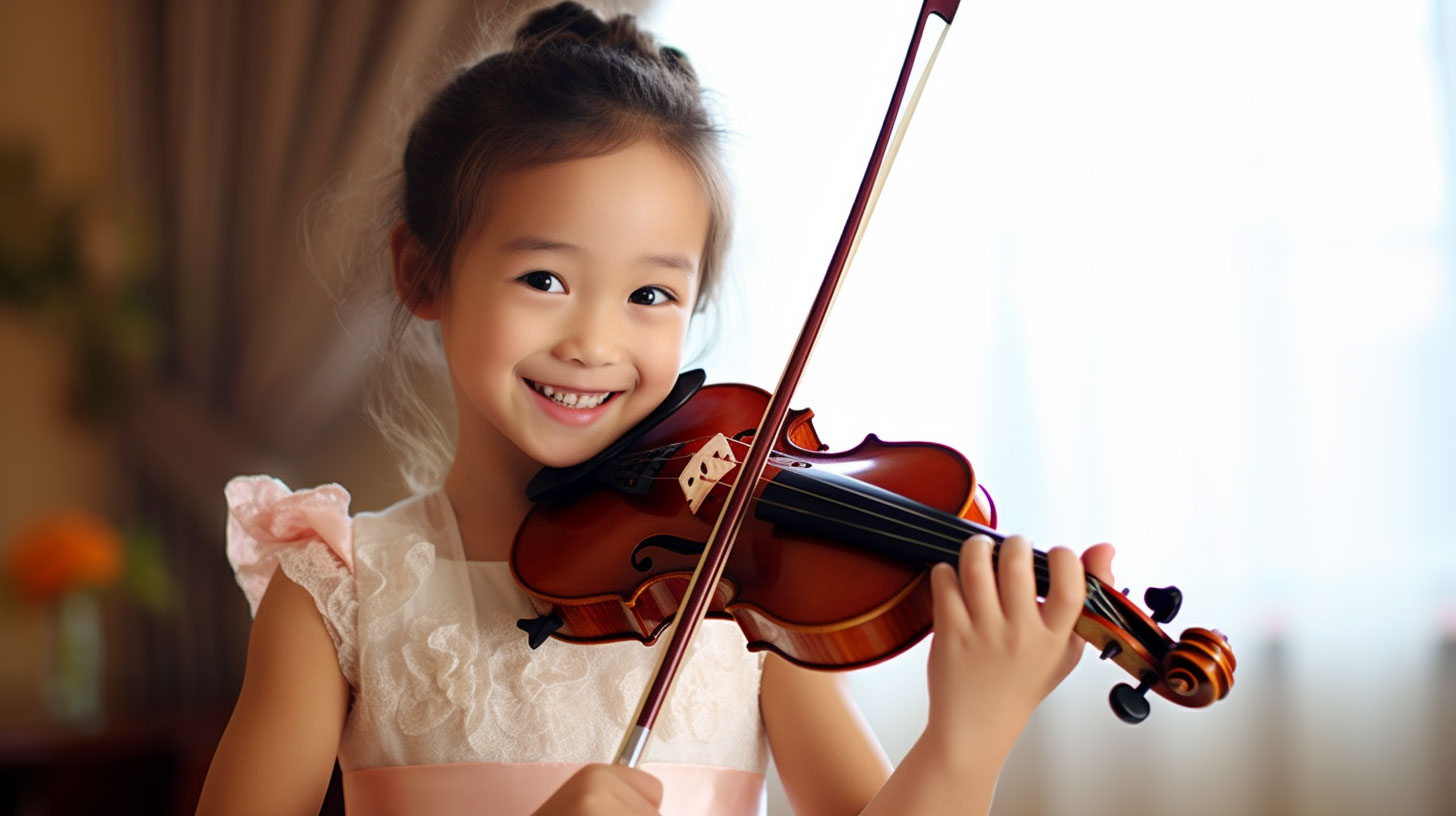
Why a 12-week term beats ad-hoc lessons
Families who book lessons only when something feels wrong tend to plateau. A fixed term gives the teacher permission to sequence skills: you cannot fix bow hold in week one if the student is already trying to play a song. Twelve weeks is long enough to see real change and short enough that a child does not lose motivation.
For overseas Chinese families, the term also solves a scheduling problem. You commit to a slot for three months, not forever. If the time zone turns out to be brutal after daylight saving changes, you finish the term and adjust. That is much easier than quitting mid-stream.
What the term actually costs
At Shang Kun Violin (Beijing), online lessons for overseas families are typically quoted per term rather than per single lesson. A standard 12-week term with one 40-minute weekly lesson generally lands in the range of USD 480–720, depending on whether you choose a single student or a sibling pair and whether the teacher holds ABRSM-oriented credentials. Some families add a second short check-in call each month at a lower rate. Ask for a written quote before week one so there are no surprises.
Weeks 1–3: posture and bow hold
These three weeks feel slow, and that is the point. The teacher is watching for a straight spine, relaxed shoulders, a violin that sits level on the shoulder, and a bow hold where the thumb is bent and the fingers are curved. On a video call this is harder to see than in person, so the camera angle matters: the student should be framed from the waist up, side-on for bow hold checks.
Three drills that survive a small screen
First, the “statue” drill — stand in playing position for 60 seconds without the violin, checking shoulders in a mirror. Second, the pencil hold — grip a pencil with the bow-hold shape for 30 seconds, four times. Third, the bow-air draw — draw the bow arm through the motion without the instrument, slowly. Each takes under two minutes and can be done in a hallway.
Parents should expect zero tunes in these weeks. If a teacher promises songs in week two, that is a signal to ask what is being skipped. Our own guidance on whether online violin lessons are effective for kids explains the real limits of screen-based posture correction.
Weeks 4–6: open strings and the first finger
Now the bow meets the string. Students work on four open strings with a steady, straight bow, then add the first finger on the D and A strings. The goal is not speed. The goal is that the bow stays parallel to the bridge and the first finger lands in the same place every time.
What “good enough” sounds like
Expect scratchy tone in week four. By week six, a short four-note pattern should sound recognizable and the bow should travel in a straight line for at least three seconds per stroke. If the student is still sawing at week six, the teacher should pause and re-check bow hold before moving on.
This is also the stage where practice resistance appears. Our article on how often a child should practice violin sets out the weekly plan we recommend, and it is deliberately modest: four short slots beat one long session.
Weeks 7–9: simple tunes
Twinkle variations, Lightly Row, and a short folk tune are typical here. The teacher chooses one tune per week and does not add a second until the first is steady. For Chinese families abroad, there is a bonus: a familiar melody from home can be used as a reward piece, which keeps a child connected to the instrument during a busy school term.
The weekly rhythm that makes this work
One 40-minute lesson, then four 20-minute practice slots. That is 80 minutes of practice plus 40 minutes of instruction per week — around two hours total, which fits between dinner and bedtime in most households. Practise the same slot on the same days; decision fatigue is what kills practice routines.
A realistic split for each 20-minute slot: 3 minutes posture and bow hold, 7 minutes open strings or first-finger drills, 7 minutes on the current tune, 3 minutes on the week’s new thing. Keep a kitchen timer visible.
Weeks 10–12: a short performance piece
The term ends with one piece performed for the family, recorded on a phone, and sent to the teacher. It does not need to be polished. It needs to be finished, from first note to last, with a bow at the end. This single event does more for retention than any practice chart.
Weeks 10 and 11 are for assembling the piece and fixing two specific spots. Week 12 is the run-through and the recording. The teacher then writes a short term report: what improved, what to keep practising over the break, and whether the next term should focus on tone, rhythm, or reading music.
Time zones: pick a slot you can defend for 12 weeks
Beijing is UTC+8. Families in London are 8 hours behind in winter, 7 in summer. New York is 13 hours behind in winter, 12 in summer. Sydney is 2–3 hours ahead. The practical rule: choose a slot that works in both your winter and summer, or accept one adjustment at the daylight-saving change and confirm it with the teacher in week one.
Weekend mornings in Beijing often map to Friday evening in North America, which suits school-age children. Avoid slots that require a child to be up before 7am local time; tired students stop absorbing bow-hold corrections around the 25-minute mark.
Buying a violin abroad: sizing basics
Sizing is measured by arm length, not age. Hold the violin under the chin and extend the left arm: if the palm cups the scroll with a slightly bent elbow, the size is right. Common sizes and rough age bands: 1/4 for ages 5–7, 1/2 for 7–9, 3/4 for 9–12, 4/4 from about age 12 or when arm length reaches roughly 60cm. Always measure; a tall 8-year-old may need a 3/4.
Local violin shops in most countries will size a child in ten minutes for free, and rental programmes are common — often USD 20–40 per month with part of the fee credited toward purchase. For a first term, renting a properly set-up instrument beats buying a cheap online violin with poor pegs. If you do buy, budget for a set of new strings and a shop setup check.
How parents without a musical background can supervise
You do not need to hear whether a note is in tune. You need to notice three things: is the violin level on the shoulder, is the bow moving in a straight line, and did the practice timer run for 20 minutes. That is it. The teacher handles pitch and rhythm.
Sit in on the lesson for the first month and write down the two instructions the teacher repeats most. Put them on a sticky note near the practice spot. If the child says “I don’t know what to practise”, read the note aloud. Our guide to choosing a violin teacher for your child includes the questions to ask about parent involvement before you commit.
What to do when practice goes badly
Stop at 10 minutes, do one fun bow-air exercise, and end on a good note. A short positive session protects next week’s session. Never extend practice as a punishment; it turns the instrument into a chore.
Materials checklist for the term
Before week one, confirm you have: a correctly sized violin with bow and rosin; a shoulder rest that fits; a music stand at eye level; a phone or laptop stand so the camera shows the student from the waist up; a stable internet connection with a backup hotspot; a printed or digital copy of the method book the teacher names; a kitchen timer; and a notebook for parent notes. Add a spare set of strings by week six — strings break at the worst times.
Term-end self-check
Run this in ten minutes at the end of week 12. Can the student stand in playing position for 60 seconds without being reminded? Can they play four open strings with a straight bow? Can they place the first finger and play a four-note pattern cleanly? Can they play one tune from start to finish? Did they complete at least 40 of the 48 practice slots? If four or more answers are yes, repeat the term structure at the next level. If two or fewer are yes, talk to the teacher about a slower pace before booking term two.
Q: Can a child really learn violin entirely online?
A: Up to the end of a first or second term, yes — posture, bow hold, open strings, and simple tunes all transfer through video if the camera angle is right. Fine intonation and advanced shifting need closer inspection, and most families add one in-person check a year if a local teacher is available.
Q: How long should each practice slot be for a 7-year-old?
A: Twenty minutes, four times a week. That is enough at this stage. Two 10-minute slots on busy days also work, as long as the total weekly practice stays around 80 minutes.
Q: What if the chosen lesson time clashes with daylight saving?
A: Confirm in week one that the teacher will hold the same Beijing time all term, and shift your local slot by an hour when your clocks change. If the new local time is unworkable, ask to switch to a different slot at the start of the next term.
Q: Should we rent or buy a first violin abroad?
A: Rent for the first term unless you already have a shop you trust. Rental keeps the size flexible as the child grows and avoids the risk of a poorly set-up cheap instrument. A shop setup and a decent bow matter more than the wood.
Q: How do we handle a two-week family trip in the middle of the term?
A: Tell the teacher at booking. Most teachers will send a short travel practice sheet — bow-air drills and one tune — and resume where you left off. You do not need to make up the missed lesson if the term is priced as 12 sessions with one planned skip.
Q: What should we do between terms?
A: Take one to two weeks off, then keep two short practice slots a week so the bow hold does not reset. Before term two begins, ask the teacher for the term report and the two priorities for the next 12 weeks.
Related reading
If you are planning the whole year rather than one term, start with the signals that online lessons are working for your child, then read the 20-minute practice plan and our notes on bedtime scheduling for overseas families. You can also browse the full news archive for term-by-term guidance.