When Should a Child Start Violin Lessons? Age Bands
Shang Kun 2026-10-09 157
When Should a Child Start Violin Lessons? Age Bands Explained
When should a child start violin lessons is a question parents ask us almost every week at Shang Kun Violin in Beijing, and the honest answer is that age matters less than readiness. A four-year-old who can sit through a picture book and hum back a tune is often more ready than a restless seven-year-old. But age bands still help, because a five-year-old and a nine-year-old learn in completely different ways. This guide walks through what each band can realistically do in the first six months, the signals worth watching, which size violin to start on, and how to trial lessons for a few weeks without signing your life away.
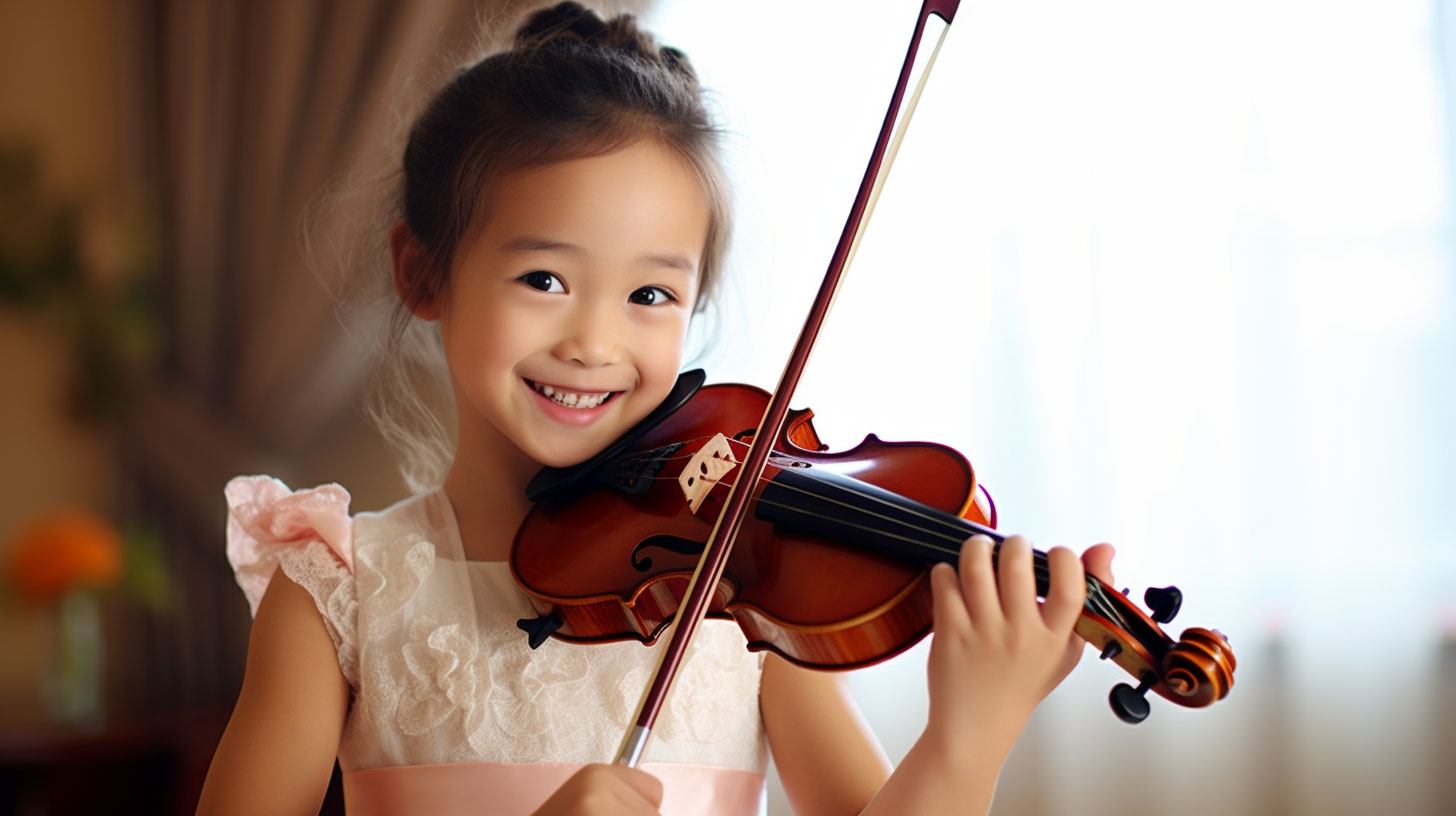
What Are the Age Bands for Starting Violin?
Starting at 4-5 years old: play-based and short
At this age the violin is a toy that makes sound. Kids can learn to hold a bow, stand in playing position for 30-60 seconds, and pluck open strings in rhythm. That is it, and that is fine. Attention span runs about 5-10 minutes per activity, so a 30-minute lesson is really three or four mini-games. Finger strength is not there yet, so expect the left hand to collapse unless the teacher uses games to build it up. Pitch response is surprisingly good: many four-year-olds can echo a two-note pattern accurately. The first six months look like this: holding the violin without dropping it, bow holds on open strings, clapping rhythms, and maybe a one-octave scale by month six if the child practices at home most days. If you are weighing readiness signs more carefully, our guide on when should a child start violin lessons based on readiness signs goes deeper into what to look for.
Starting at 6-7 years old: the sweet spot for many
This is when most children can handle a real lesson structure. They can follow two-step instructions, sit through 45 minutes with a break, and understand that practice is a daily habit, not a mood. Finger strength improves fast once they start pressing strings, and by month three many can play simple tunes like "Twinkle" with correct rhythm. In the first six months, a 6-7 year old can realistically learn: open strings with a straight bow, first finger placement, a one-octave D major scale, and three to five short pieces. Reading music starts here too, though slowly. Parents should still sit in on practice for the first few months, because kids this age forget half of what the teacher said within an hour. We see this band make the fastest visible progress, which is why so many families wait until six or seven.
Starting at 8 years old and above: faster progress, higher expectations
Older beginners move quickly because their bodies and brains are ready. They can hold the violin correctly, use all four fingers within weeks, and read music from the start. The first six months often cover what a five-year-old takes a year to do: two-octave scales, proper bow distribution, and real repertoire. The trade-off is self-consciousness. An eight-year-old knows when they sound bad, and that can sting. Teachers who work well with this age group build in small wins early. If your child is eight or older and wants to start, there is no reason to wait, but be honest about practice time: 20-30 minutes a day is the minimum for steady progress at this age. Our article on how often a child should practice violin ages 5-10 breaks down a realistic weekly schedule.
Readiness Signals Worth Watching
Attention span: can they focus for 10 minutes?
Forget the 30-minute lesson for a moment. Can your child sit and do one thing, like coloring or building blocks, for ten minutes without getting up? If yes, they can probably handle a beginner lesson. If no, wait three months and check again. This one signal predicts lesson success better than age.
Finger strength: can they press a string down?
Ask your child to press their thumb and index finger together hard, then release. If the fingers tremble or give way immediately, they are not ready for pressing strings. Building strength with playdough, legos, and squeezing a soft ball helps. A teacher can also start with plucking and open strings while strength develops.
Pitch response: can they echo a simple tune?
Hum two notes, then ask your child to hum them back. Most kids can do this by five, some by four. If they cannot match pitch at all, it does not mean they cannot learn violin, but it does mean ear training should start alongside the instrument. Good teachers spend the first months on listening games for exactly this reason.
What Size Violin Should a Child Start On?
Size is not about age, it is about arm length. Here is the rough rule: a child under five usually needs a 1/8 or 1/10 size. Ages five to seven often fit a 1/4. Ages seven to nine usually take a 1/2. Ages nine to eleven fit a 3/4. Most kids move to a full-size 4/4 around eleven or twelve, sometimes later. The test is simple: have the child hold the violin under their chin with the left arm extended. The palm should cup the scroll comfortably, with a slight bend in the elbow. If the arm is straight and locked, the violin is too big. If the hand swallows the scroll, it is too small. A poorly fitted violin causes bad posture that takes months to fix, so get this right before the first lesson. For families abroad, our post on online violin lessons for Chinese families abroad covers how teachers assess size over video.
How to Trial a Few Weeks Without Committing
You do not need to buy a violin or sign a year-long contract to find out if your child likes it. Here is how we suggest families trial it. First, rent a violin for one month. In Beijing, a decent student rental runs about 200-400 RMB per month, and most shops apply part of that toward a purchase later. Second, book four weekly lessons, not twelve. Four lessons is enough to see whether your child walks to the violin or drags their feet. Third, keep practice to 10 minutes a day during the trial. The goal is not progress, it is answering one question: does my child ask to play again? If after four weeks they still groan when the violin comes out, wait six months and try again. If they hum the tunes between lessons, you have your answer.
What Changes After the First Six Months?
By month six, the differences between age bands start to blur. A five-year-old who started early and a seven-year-old who started later often sit at similar levels. What matters more is consistent practice and a teacher who adjusts to the child. Kids who practice 15 minutes five days a week pull ahead of kids who practice 45 minutes once a week, every time. If you are still choosing a teacher, our checklist on how to choose a violin teacher for your child covers the questions worth asking before you pay for a term.
Q: Is four years old too early for violin lessons?
A: Not too early if the child can focus for ten minutes and enjoys music games. At four, lessons should be short and play-based. If your child cannot sit still for a story, waiting six months is smarter than forcing it.
Q: Can a child start violin at eight or nine with no musical background?
A: Yes, and they often progress faster than younger beginners. Their hands are stronger, they read faster, and they understand instructions. The main hurdle is embarrassment about wrong notes, so pick a teacher who is patient with older beginners.
Q: How do I know my child is ready for violin?
A: Three signals: ten minutes of focused attention, enough finger strength to press a string, and the ability to echo a simple two-note tune. If two of three are present, a trial month will tell you the rest.
Q: What size violin does a five-year-old need?
A: Most five-year-olds fit a 1/4 or 1/8, depending on arm length. Have them hold the violin under the chin with the left arm extended; the palm should cup the scroll with a slight elbow bend. When in doubt, go smaller rather than larger.
Q: How much do beginner violin lessons cost in Beijing?
A: Group lessons run about 150-300 RMB per session. One-on-one lessons with an experienced teacher run 400-800 RMB per hour, and teachers with ABRSM track records charge at the higher end. Online lessons are often 20-30 percent less.
Q: Should we rent or buy a first violin?
A: Rent for the first three to six months. Student rentals in Beijing cost around 200-400 RMB per month, and kids grow out of sizes quickly. Buy once your child has shown they will stick with it and you know their correct size.
Related Reading
Violin practice routine for children: 20 minutes a day
Is online violin lesson effective for kids? What to check
Chinese violin teacher for kids overseas: how to pick
Shang Kun Violin: online and Beijing in-person lessons
