Is Online Violin Learning Effective for Kids?
Shang Kun 2026-10-04 155
Is online violin learning effective for kids? It can be, but only when the setup is right and the parent is ready to be part of the team. I am a violin teacher at Shang Kun Violin in Beijing, and I have taught both online and in person, including many kids in the US, Canada, the UK, Australia and Singapore who learn through a screen. I have seen six-year-olds make steady progress online. I have also seen families quit after three months, not because the child lacked talent, but because nobody fixed the room, the camera, the routine or the practice habit.
So instead of a yes or no answer, think of it as a trade. Online gives you access to a teacher who actually understands how a child's bow arm works, even if that teacher is eight time zones away. The trade is that you, the parent, become the hands in the room between lessons. If you accept that, the results can be real. If you expect the screen to do everything, it usually will not.
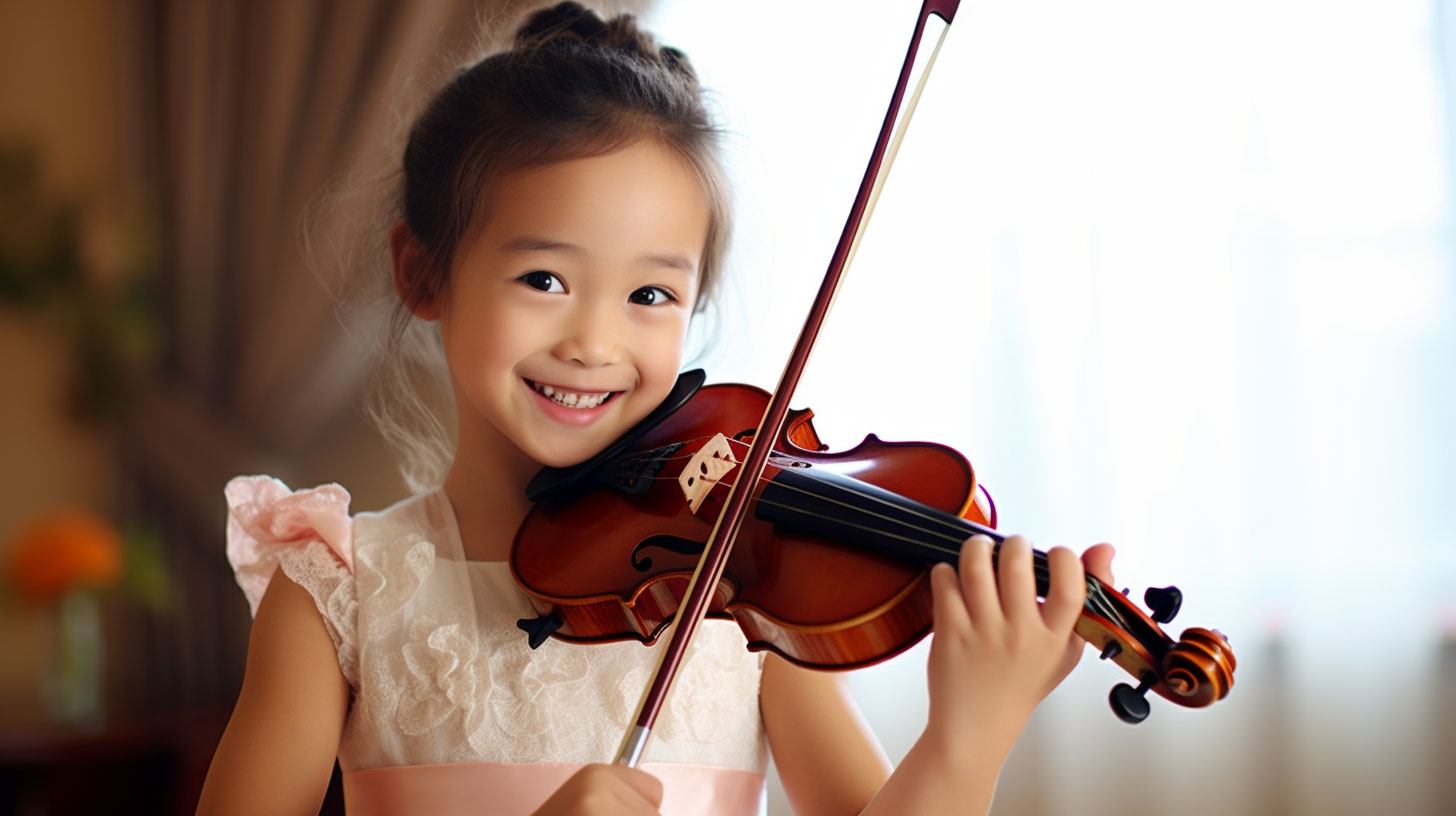
What does "effective" actually mean for a child learning violin online?
Effective does not mean fast. For a beginner, effective means the child builds a comfortable playing position, plays in tune on simple pieces, keeps a steady pulse, and still wants to open the case next week. Those goals are achievable online. What is harder online is the tiny physical correction, like a stiff wrist or a collapsed left hand, which a teacher can spot in the room but sometimes misses through a webcam.
A realistic benchmark: in the first three months, a child practicing 15 to 20 minutes a day, five days a week, should be able to play two or three short pieces with a recognizable tone. That is roughly the same as in-person lessons, assuming the practice happens. If practice does not happen, no format works.
What are the honest advantages of online violin lessons for kids?
Scheduling that fits a family's real week
For overseas families, the biggest win is not pedagogy. It is logistics. You do not drive 40 minutes each way, you do not sit in a waiting room, and you do not lose a Saturday morning. A 30-minute lesson can fit between dinner and homework. That consistency matters more than people admit, because violin progress is built on frequency, not on marathon sessions.
Access to a teacher who specializes in your child's level
If you live in a small town, the nearest violin teacher may be a general music teacher who also teaches piano and voice. Online, you can choose someone who teaches beginner violin technique all day. At Shang Kun Violin, our teachers work with the ABRSM and similar frameworks, so the path from Grade 1 to Grade 5 is clear. You can read more about beginner violin: your first three months to see how that path usually looks.
Recordings make practice at home less fuzzy
Every online lesson can be recorded with the teacher's permission. A child who forgets what the bow hold should feel like can rewatch a two-minute clip. That is a genuine advantage over a live lesson where the parent is trying to remember everything from the car ride home.
What are the real disadvantages parents should know?
Sound quality hides tone problems
A laptop microphone compresses the violin's sound. A scratchy bow or a slightly flat note may sound smoother through the screen than it really is. Teachers learn to compensate by asking the child to play closer to the microphone or to repeat a phrase, but it is never perfect. Sometimes a parent needs to send a short phone recording after the lesson so the teacher can hear the real sound.
Posture corrections take longer
In person, I can walk around a child, lift an elbow, adjust a shoulder rest, and see the result in two seconds. Online, I describe it, the child tries, and I ask the parent to move the camera. A fix that takes one minute in person can take five online. That is not a dealbreaker, but it means lessons may move a little slower in the first two months.
It is harder for very young beginners
For a four- or five-year-old, online lessons are possible but demanding. Attention spans are short, and they need an adult sitting beside them for most of the lesson. Many families wait until age six or seven, or they do a hybrid setup. I wrote a separate guide on when should a child start violin lessons if you are trying to decide.
What does a hybrid setup look like in practice?
A hybrid setup usually means one online lesson per week plus one local check-in per month or per term. The local check-in does not need to be a formal lesson. It can be a 20-minute visit with a local violinist, a school music teacher, or even a university student who plays violin. Their job is simple: look at the child's posture, bow hold, shoulder rest and instrument size, and report back.
This works because online teaching is strong on musical instruction, rhythm, reading, repertoire and interpretation. A local pair of eyes is strong on physical setup. Put them together and you cover both sides. Expect to pay between 15 and 40 USD for a short local check-in in most cities, though many teachers include it in a monthly package. Our own online lessons are priced at 180 to 350 RMB per 30 minutes, depending on the teacher's experience and the lesson length, and we recommend a check-in every four to six weeks.
If you go this route, tell both teachers what the other is doing. A local teacher who only sees the child once a month should not start changing the bow hold or the repertoire. Their role is maintenance and confirmation, not a second curriculum.
What must a parent actually do to make online lessons work?
Set up the room once, properly
You need a chair with a flat seat, a music stand, a device at roughly eye level, and a light source in front of the child, not behind. A lamp behind the child turns them into a silhouette. A cheap clip-on light costs less than 20 USD and fixes more lessons than most people realize. Test the camera angle before the first lesson: the teacher should see the bow arm and the left hand, not just the face.
Sit in for at least the first ten minutes
You do not need to sit through the whole lesson forever, but for the first month, stay nearby. Write down one or two practice points, not ten. A parent who remembers too much becomes a coach at home, and that usually creates tension. The teacher should be the authority; you are the reminder.
Protect the practice slot
A violin needs short, regular practice. Ten minutes after breakfast beats forty minutes on Sunday. A simple routine that works is described in violin practice routine that works, and it is worth reading before you build your own.
Handle the technical stuff before the lesson
Check the internet, charge the device, have the music ready, and make sure the violin is in tune. A parent who learns to tune the violin with a free app saves five minutes of every lesson. That is 20 minutes a month, which is almost a free lesson each term.
Communicate with the teacher between lessons
If the child had a rough week, say so. If the shoulder rest keeps slipping, send a photo. Teachers can adjust the next lesson plan if they know what is happening. Silence makes every lesson feel like a fresh start, and fresh starts are slow starts.
How do you know if online lessons are not working?
Three warning signs. First, the child cannot describe what they are supposed to practice. Second, the same correction comes back for four or five weeks with no change. Third, the child starts hiding the violin or "forgetting" the lesson time. Any of these means the setup needs a reset, not that the child should quit music.
Sometimes the fix is adding a local check-in. Sometimes it is switching to a shorter lesson. Sometimes it is simply moving the lesson to a time when the child is not tired. I have seen all three turn a stalled student around within a month.
Does online learning prepare kids for exams and performances?
Yes, with planning. ABRSM and similar exams are based on pieces, scales, sight-reading and aural skills, and all of those can be taught online. The part that needs extra attention is stage presence and playing in a room with real acoustics. If your child plans to take exams, ask the teacher to include mock exam sessions on video, and try to arrange one or two in-person play-throughs before the exam date. A school recital or a local music group can serve that purpose.
For families in Beijing, we also offer in-person lessons, which many students use as a monthly supplement to their online schedule. You can see the full setup on our Chinese violin teacher online and Beijing in-person lessons page.
Q: Is online violin learning effective for a complete beginner child?
A: It can be effective if the child is at least six or seven, has a parent nearby for the first month, and practices short sessions five days a week. Younger children usually need more in-person support.
Q: How many online lessons per week does a child need?
A: One 30-minute lesson per week is the common starting point. Some families add a 15-minute midweek check-in on video, which helps keep practice honest.
Q: Can a parent who knows nothing about violin help at home?
A: Yes. You do not need to play. You need to tune the instrument, set up the camera, write down one practice point, and protect the practice time. That is enough.
Q: What equipment is needed for online violin lessons?
A: A laptop or tablet, stable internet, a music stand, a chair with a flat seat, a clip-on light, and a phone for backup recordings. A USB microphone helps but is not required at the start.
Q: How much do online violin lessons cost for kids?
A: At Shang Kun Violin, online lessons are 180 to 350 RMB per 30 minutes depending on the teacher and lesson length. Local check-ins in other countries often cost 15 to 40 USD per short visit.
Q: How long before a child sees real progress online?
A: With consistent practice, most beginners can play two or three simple pieces after three months. Tone and intonation keep improving slowly over the first year.
