When Should a Child Start Violin Lessons
Shang Kun 2026-10-01 207
When Should a Child Start Violin Lessons?
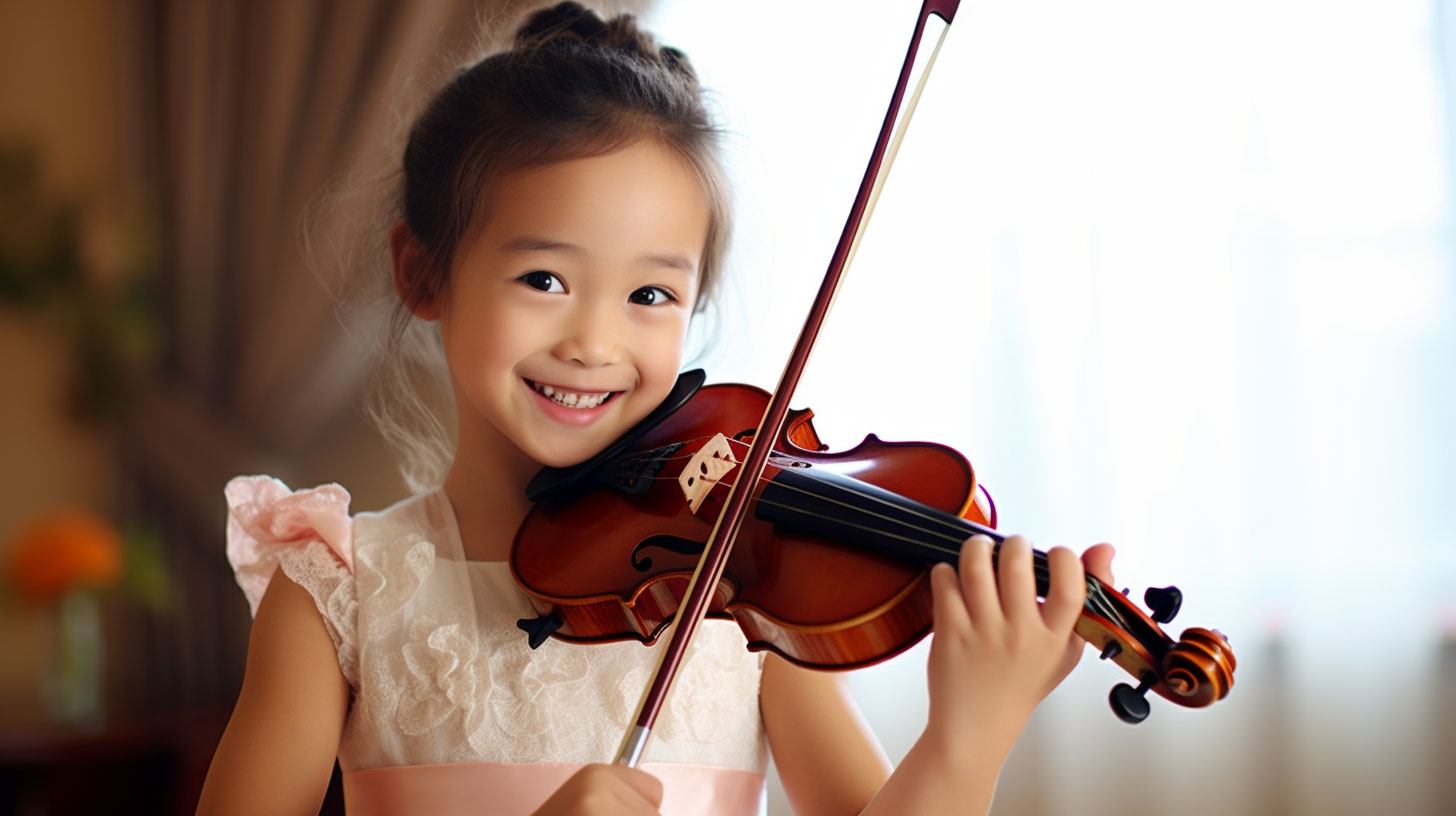
Parents searching for a clear answer to "child start violin" usually want a number, and the honest answer is that most children are ready between ages four and seven, with six being the sweet spot for many families. That range is not a marketing line. It comes from what a young child's hands, ears, and attention span can actually do. A four-year-old can hold a small violin and pluck open strings. A five-year-old can often manage a short bow stroke with help. A six- or seven-year-old can usually follow a thirty-minute lesson, remember a practice routine, and read simple notation. Before age four, most teachers in Beijing will suggest a general music class or a few months of rhythm games instead. The reason is simple: violin playing asks for fine motor control in both hands at once, and that control develops at different speeds in different children.
Why Age Four to Seven Is the Common Window
Violin is not a keyboard instrument where pressing a key gives a fixed pitch. The left hand has to find the note, and the right hand has to draw a clean sound from a string. Both jobs need a level of coordination that most children reach somewhere between four and seven. Teachers at Shang Kun Violin in Beijing tend to look at three signals rather than a birthday. Can the child copy a short clapping pattern? Can they stand still for two or three minutes? Can they follow a two-step instruction such as "hold the violin up, then put the bow on the string"? When two of those three are yes, a trial lesson usually makes sense.
Some children are ready at four. Others are not ready until eight, and that is completely normal. Starting early is not automatically better. A child who starts at eight with good focus often moves faster in the first year than a restless four-year-old, because the older child can practice independently and understand corrections.
What a Four-Year-Old Violin Lesson Actually Looks Like
Short lessons, lots of rhythm games
A four-year-old lesson is often twenty to thirty minutes, not forty-five. It includes clapping, marching, echoing short phrases, and holding a one-sixteenth or one-eighth size violin. The bow may stay in the case for several weeks. Parents should expect the first month to look more like play than music, and that is intentional. The goal is to build the habit of showing up and listening.
Parent involvement is not optional
At this age, a parent sits in the lesson, takes notes, and repeats the same three or four exercises at home. Ten minutes a day is enough. If a parent cannot commit to sitting with the child three or four times a week, waiting a year is often the wiser choice.
What Changes Between Five and Seven
Five-year-olds: bow holds and open strings
Many five-year-olds can start bowing on open strings. The bow hold is the big project. Teachers use rhymes, bow-hold games, and a mirror. A five-year-old might spend a whole term on open strings and simple rhythms before pressing a finger down. That is normal, and it pays off later because a clean bow arm is hard to fix once bad habits set in.
Six and seven-year-olds: first songs and reading
By six or seven, most children can learn a first finger pattern, play a short folk song, and begin reading notes on a staff. Lesson length can move to thirty or forty-five minutes. At this stage a child can often practice with a parent nearby but not directly helping, which frees the parent to just listen.
Signs Your Child Is Not Ready Yet
There is no shame in waiting. Watch for these signs. The child refuses to hold the violin for more than a minute. They cry or shut down when corrected. They cannot stand in one place for a two-minute activity. They cannot repeat a simple rhythm after you clap it. If you see two or three of these, a year of general music, singing, or movement classes will build the same skills without the frustration.
One more sign: if the parent is the one who wants the violin and the child has no interest at all, wait. A child who chooses the instrument, even loosely, practices more willingly in month six when the novelty has worn off.
How to Test Readiness Without a Full Commitment
Book a single trial lesson instead of signing a term. In Beijing, a thirty-minute trial at a local studio usually runs about 150 to 300 RMB, and many teachers will tell you honestly after one session whether the child is ready. Bring the child to the lesson rested and fed. Ask the teacher one question at the end: "If we wait six months, what would you want us to work on at home?" The answer tells you whether the teacher is thinking about your child or about filling a slot.
If your child is ready, the next practical question is the instrument size. A violin that is too large causes bad posture and a pinched sound, and it is one of the most common beginner mistakes. Our guide to choosing the right violin size for a child walks through the arm-length measurement and the sizes you will meet from one-sixteenth up to full size.
How Lesson Format Changes With Age
Young beginners do better with two short lessons a week than one long one. A four-year-old may do two twenty-minute sessions. A six-year-old can handle one thirty-minute lesson plus a short practice most days. A seven-year-old can usually manage a forty-five-minute weekly lesson and twenty minutes of home practice. If you are comparing studios and want to know what a typical beginner class includes, this overview of beginner violin classes in Beijing and what to expect covers lesson length, group versus one-to-one, and the first-term goals most teachers set. Shanghai Kun Violin teaches both online and in person in Beijing, and the age-readiness assessment is the same for both formats.
Does Starting Later Put a Child Behind?
No. The idea that a musician must start at four is a myth borrowed from a small number of famous soloists. For most children, the goal is a lifelong skill, not a competition deadline. A child who starts at eight or nine with steady practice can reach a solid intermediate level by the teenage years. What matters more than the start date is whether practice happens most days and whether the teacher fits the child.
There is one real advantage to starting young: the ear learns pitch and rhythm easily before age seven, similar to how a child picks up a language. That advantage is about listening, not about playing fast. You can build it with singing and rhythm games even if formal violin lessons wait.
What Parents Should Ask Before the First Lesson
Ask about lesson length for your child's age, how much home practice is expected, and whether the teacher has experience with young beginners. Ask what size violin the teacher recommends and whether the studio rents instruments, because children outgrow sizes every year or two. Ask how progress is measured in the first three months. A good teacher will name specific skills such as a steady bow hold, open-string tone, and one short piece, not vague promises.
If you are still deciding between teachers, our guide to how to choose a violin teacher in Beijing explains what to look for in the first meeting, including how the teacher talks to the child, not just to the parent.
Q: What is the ideal age to start violin lessons?
A: Most children are ready between four and seven, with six being a common sweet spot. Readiness depends on focus, hand control, and the ability to copy simple patterns, not only on age.
Q: Can a three-year-old start violin?
A: A few three-year-olds can, but most teachers recommend waiting. At three, general music and rhythm classes build the same listening skills with less frustration.
Q: How long should a beginner violin lesson be for a young child?
A: Twenty to thirty minutes for ages four and five, thirty to forty-five minutes for ages six and up. Two short lessons a week often work better than one long one for the youngest students.
Q: How much does a trial violin lesson cost in Beijing?
A: A thirty-minute trial lesson at a local studio typically costs about 150 to 300 RMB. Some schools credit the trial fee toward the first month if you enroll.
Q: What size violin does a beginner child need?
A: Size is based on arm length, not age. A four- or five-year-old often uses one-eighth or one-quarter size, while a seven-year-old may use one-half or three-quarter. A teacher or shop should measure the child in person.
Q: How much should a young beginner practice?
A: Ten minutes a day for ages four to five, and fifteen to twenty minutes for ages six to seven. Short daily practice beats one long weekend session.
Q: Should we wait if my child is not interested?
A: Yes. A child who has some interest practices more willingly after the first few months. Waiting six to twelve months rarely hurts long-term progress.
