How to Choose a Violin Teacher for My Child: 5 Checks
Shang Kun 2026-10-11 142
If you are searching for how to choose a violin teacher for my child, the fastest test is this: watch whether the teacher corrects your child's posture in the first ten minutes of a trial lesson. A good teacher fixes the bow hold before the child plays a single note. That single detail tells you more than a fancy diploma on the wall. Shang Kun Violin (Beijing) has worked with families in Beijing and overseas for years, and the parents who end up happy are the ones who checked four things by themselves instead of trusting a shiny profile. Here is the decision guide I wish every parent had before they paid a deposit.
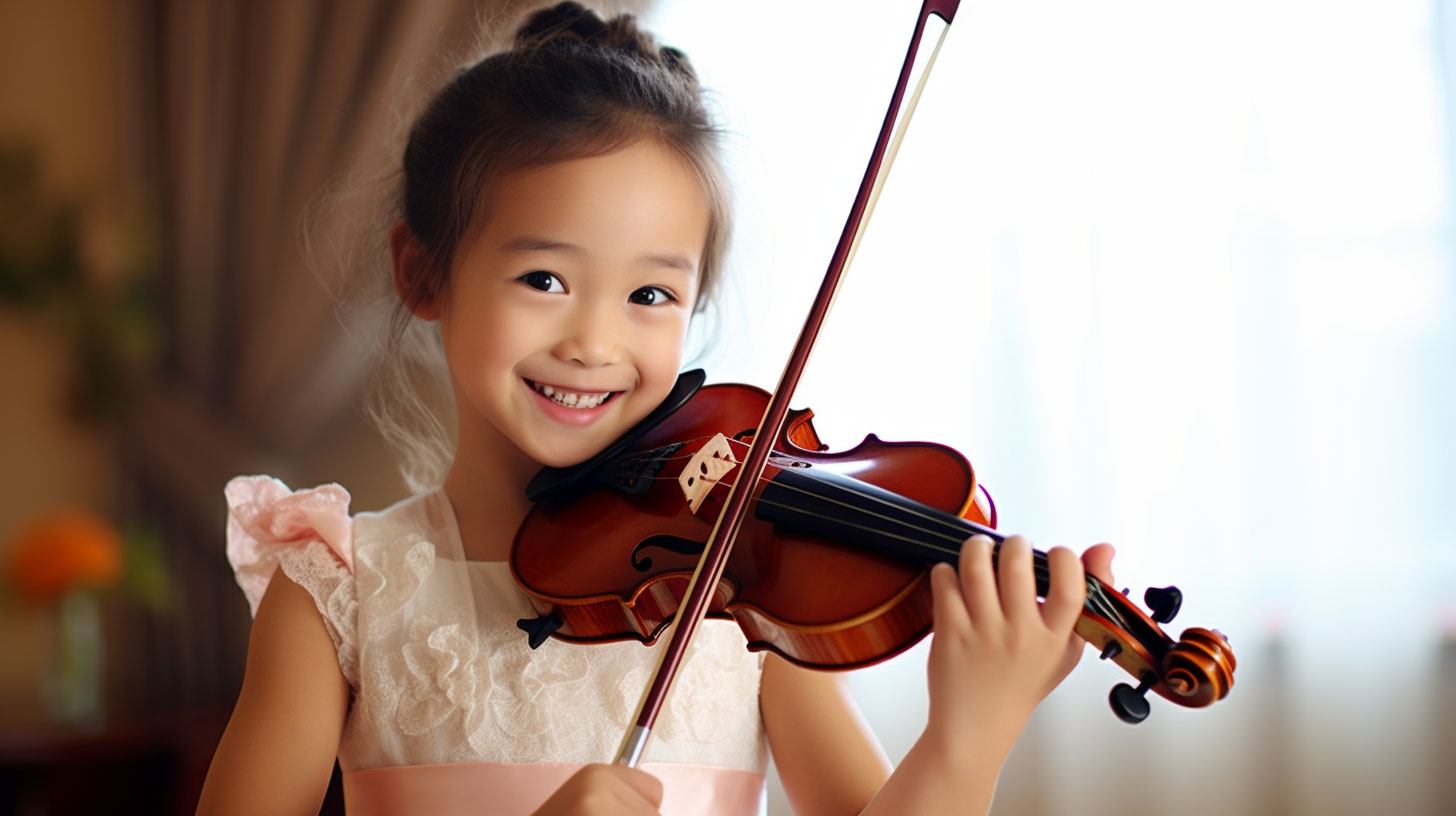
Check 1: Does the Teacher Adjust Your Child's Body Before the Bow Touches the String?
Ask to sit in on the first lesson. Within five minutes you should see the teacher move your child's left elbow, lift the scroll, or loosen a locked shoulder. Beginners do not have a "bad ear" problem first. They have a body problem. If the teacher launches straight into Twinkle, Twinkle with a child whose violin is drooping to the floor, that teacher is collecting fees, not building technique.
Watch the hands. Good teachers use their own hands to guide, then step back and let the child try. Bad ones talk for fifteen minutes about music theory while the child's arm slowly dies. You do not need to know violin to spot this. You just need to watch whether your child's posture looks better at minute twenty than it did at minute two.
What you can verify without any musical training
Three things. One: the violin stays roughly parallel to the floor, not pointing at the ground. Two: the left wrist is not collapsed against the neck. Three: the bow travels in a straight line, not a sawing arc. If the teacher ignores all three, that is your answer. You can read more about what to ask before you commit in this guide on how to choose a violin teacher for my child with a checklist.
Check 2: How Does the Teacher Talk When Your Child Plays a Wrong Note?
This is the emotional safety check, and it matters more for a seven-year-old than for a seventeen-year-old. Listen for the word "again" versus the word "wrong." A teacher who says "let's try that again, keep your elbow still" keeps the child in the game. A teacher who sighs, or says "no, no, no" three times in a row, will have your child crying in the car by week three.
You are not looking for a cheerleader. You are looking for someone who corrects clearly and without heat. Kids can handle hard feedback. They cannot handle contempt. If your child shrinks physically during the lesson, that is data.
The one question to ask after the trial
Do not ask your child "was it fun?" Every kid says yes to be polite. Ask instead: "Did the teacher show you how to hold it better?" If your child can demonstrate one specific fix, the teacher taught something. That is the real test. Some related red flags are collected in this article on warning signs when picking a violin teacher, and they are worth reading before you sign anything.
Check 3: Does the Teacher Give You a Practice Plan You Can Actually Run at Home?
A teacher who only teaches during the lesson is only doing half the job. Ask directly: "What should we do for the next six days?" A strong answer sounds like this: ten minutes of open strings, five minutes of bow hold on a pencil, then the first line of the piece. A weak answer sounds like "just practice."
You are the person sitting in the living room on Tuesday night. If the teacher has not equipped you, practice becomes a fight and the violin becomes a punishment. Ask whether the teacher wants a parent in the room or outside the door. Both answers are fine, but the teacher should have a clear preference and a reason.
Practice length by age, roughly
A five-year-old does ten to fifteen minutes. A seven-year-old does twenty. A ten-year-old does thirty, sometimes split into two sessions. If a teacher tells you a six-year-old should practice an hour daily, that teacher does not understand young bodies or young attention spans. For a fuller weekly structure, see this plan on how often a child should practice violin.
Check 4: Is the Fee Structure Clear, and Does It Match Your Local Market?
Now the money part, because this is where families get surprised. In Beijing, private one-to-one violin lessons for children typically run from about 200 to 500 RMB per 45-minute session, depending on the teacher's experience, location, and whether they teach at a studio or come to your home. Teachers attached to conservatories or with competition students sit at the top of that range. University students and newer teachers sit near the bottom. Online lessons from a Beijing-based teacher often land between 150 and 350 RMB per session, since the teacher saves commute time and studio rent.
Be suspicious of two extremes: a price far below market usually means an untrained teacher, and a price far above market should come with a clear reason, such as competition coaching or ABRSM exam preparation. Ask how fees are billed. Monthly is normal in Beijing. Pay-per-lesson is friendlier for a trial period. Packages of twenty or more lessons sound like a deal until your child quits in month two. Never pay a full year upfront.
What to Watch in the Trial Lesson Itself
Book a single paid trial, not a free group demo. A free group class is a sales event, not a lesson. In a real trial, you want to see the teacher assess your child: Can the child clap a steady beat? Can the child hold the violin up for thirty seconds? Does the child follow a two-step instruction? A teacher who skips assessment and jumps to a song is guessing.
Four moments that reveal the teacher
Minute five: does the teacher kneel or sit to be at your child's eye level? Minute ten: does the teacher demonstrate on their own instrument, or only talk? Minute twenty: does the teacher write down what to practice? Minute forty: does the teacher tell you honestly what the first month will look like, including the boring parts? If the teacher promises that your child will play a full song in two weeks, walk away.
Online versus in-person, briefly
For families living outside China or far from a city center, online lessons work better than most parents expect, but only if the teacher knows how to teach through a camera. That means asking for specific camera angles, checking bow hold against the screen, and sending short video assignments. If you are weighing this option, this article on whether online violin lessons work for kids covers the signs that tell you it is working.
Questions to Ask Before You Pay
Write these down and actually ask. How long have you taught children under ten? What method book do you use, and why? How do you handle a week when practice did not happen? Do you prepare students for ABRSM or conservatory exams, and at what point? Can I sit in every lesson, or only the first one? What is your cancellation policy? A teacher who gets annoyed by these questions is telling you something.
A quick note on teacher pedigree
A degree from a top conservatory is a good sign, but it does not guarantee a good teacher for a six-year-old. Some of the strongest performers are the worst communicators with small children. Ask to observe a lesson with a current young student, if the teacher allows it. Watching a teacher handle someone else's child for thirty minutes tells you everything.
Frequently Asked Questions
Q: How do I know if my child is ready for violin lessons at all?
A: Most children are ready between five and seven. The practical signs: your child can hold a pencil with some control, can follow a two-step instruction, and can sit or stand still for fifteen minutes. If your child cannot yet do these things, waiting six months costs nothing. Readiness signs are covered in more detail in this guide on when a child should start violin lessons.
Q: Should the teacher be a native Chinese speaker if we live abroad?
A: Not required, but it helps if your child is more comfortable in Chinese. The bigger issue is teaching skill with young beginners, not language. Many Beijing-based teachers now teach overseas Chinese families online, and the shared language removes one layer of friction during the early months.
Q: Is a cheaper teacher fine for the first year?
A: For the first six months, a solid mid-range teacher is usually better than the cheapest option, because bad habits in bow hold and posture take a year to undo. You are not paying for virtuosity. You are paying for someone who catches physical errors early.
Q: How many lessons per week should a beginner take?
A: One lesson per week is standard. Two can help before an exam or competition, but for a young beginner, one lesson plus short daily practice beats two lessons with no home practice.
Q: What if my child wants to quit after two months?
A: Give it a full term, roughly three months, before deciding. The first eight weeks are physically uncomfortable and musically boring. If your child still dreads it after three months with a teacher you trust, quitting is a reasonable choice, not a failure.
Q: Can I switch teachers without drama?
A: Yes, and you should if the fit is wrong. Pay what you owe, thank them, and move on. Teachers in Beijing expect this, and a good one will not guilt you. Just avoid switching every month, because constant changes reset your child's progress.
Q: How much should I budget for the first year, including the instrument?
A: In Beijing, budget roughly 8,000 to 20,000 RMB for lessons across a year, plus 800 to 3,000 RMB for a starter violin and bow. Rent an instrument for the first three months if you are unsure. It saves money and tells you whether your child sticks with it.
Related Reading
If you want to compare notes before booking a trial, these pages answer the questions parents ask most: what to ask a violin teacher before hiring, and for families outside China, how online violin lessons for Chinese students actually work.
