When should a child start violin lessons: 2 checkpoints
Shang Kun 2026-11-23 172
When should a child start violin lessons: 2 checkpoints
When should a child start violin lessons is a question parents ask us almost every week, and the honest answer is that the calendar matters less than two checkpoints you can actually observe at home. We are Shang Kun Violin (Beijing), and after years of teaching both in our Beijing studio and online with families abroad, we have stopped handing out a single age number. Two things decide readiness: can the child hold focus for about twenty minutes and follow a two-step instruction, and does the child have the finger strength and arm length to manage the smallest fractional violin without fighting it. If both are yes, lessons can start. If one is no, waiting a few months costs nothing.
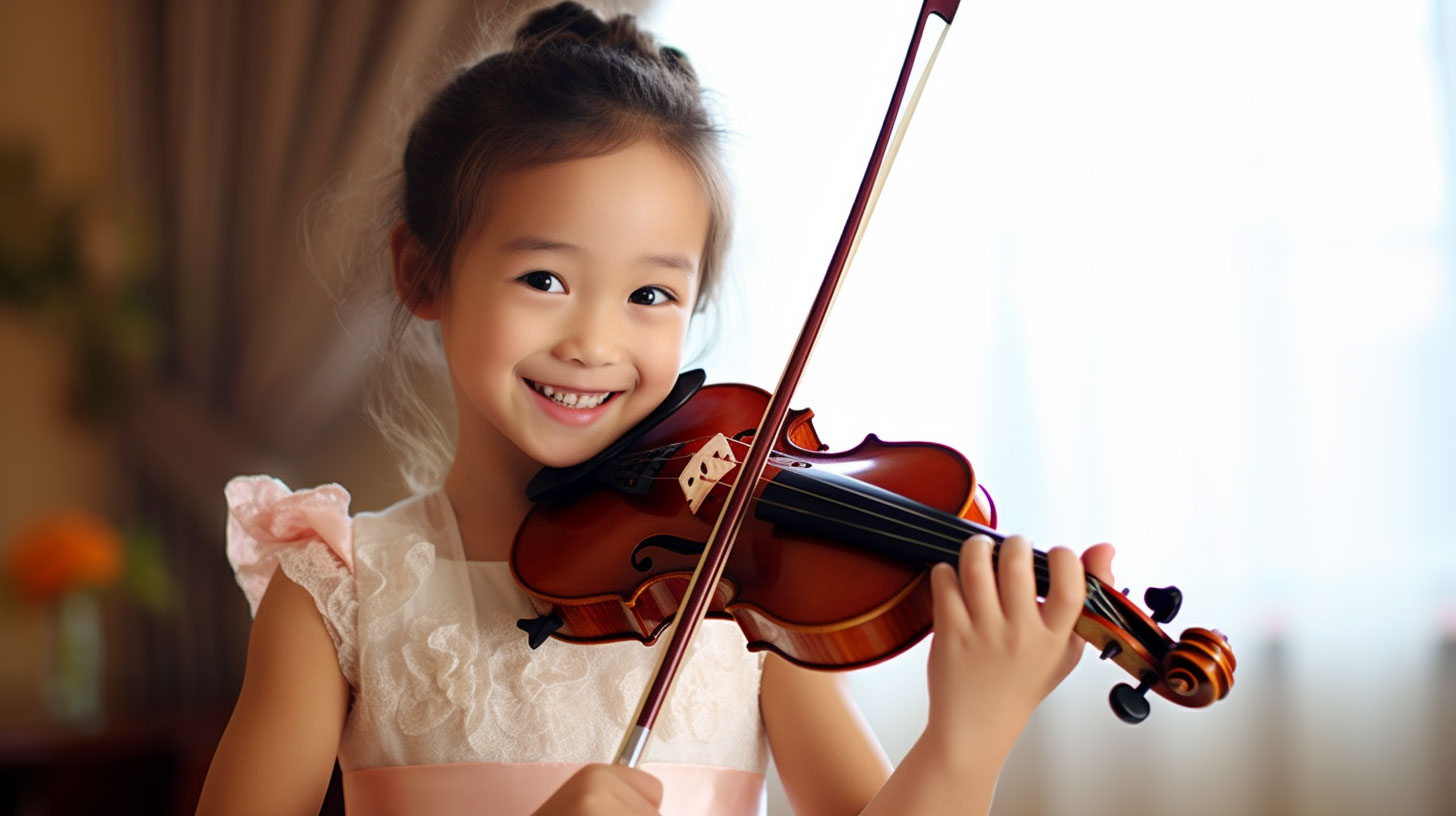
Checkpoint one: twenty minutes of focus and a two-step instruction
This is the checkpoint most parents underestimate. A violin lesson is not a sing-along; it asks a child to listen, copy, adjust, and try again. That loop needs a certain amount of attention span.
What twenty minutes of focus actually looks like
It does not mean sitting frozen like a statue. It means the child can stay with one activity, with small breaks, for roughly twenty minutes without dissolving into tears or running off. In practice, most children reach this between ages five and seven. Some get there at four. Plenty of bright, lively six-year-olds still cannot do it in a structured setting, and that is normal.
The two-step instruction test
Try this at home before you book anything. Say: "Pick up the red cup and put it on the kitchen table." Two actions, one sentence. If the child regularly completes this kind of instruction, the lesson format will make sense to them. If they hear only the first half, they are not being naughty; the working memory just is not there yet. A violin teacher who understands child development will notice this in the first ten minutes, which is one reason we encourage a trial lesson before committing to a term. You can read more about what to look for in a first lesson in our guide on how to choose a violin teacher for my child.
Checkpoint two: finger strength and arm length for a fractional violin
The smallest playable violins are 1/16 and 1/8 size. A child needs to be able to hold the instrument under the chin, reach the strings with the left hand, and press a string down cleanly with one finger. That is a strength question as much as a size question.
How to check at home without a teacher
Ask the child to press their index finger onto a tabletop firmly enough that the fingertip turns slightly pale, then hold for five seconds. If they can do it without the whole arm shaking, the finger strength is probably there. For arm length, a violin shop will measure from the neck to the palm; most children fit a 1/8 around age five to six and a 1/4 around seven to eight. Do not buy a bigger instrument to "grow into." An oversized violin forces bad posture that takes months to undo.
What a too-big violin does to a beginner
The left elbow drops, the wrist collapses, the bow arm loses its angle. The child sounds bad, gets frustrated, and decides violin is not for them. We have seen this dozens of times in Beijing, and it is almost always an instrument problem, not a talent problem. A proper fractional violin in China costs roughly 800 to 2,500 RMB for a decent student model; a 1/16 or 1/8 from a specialist shop is usually in the lower half of that range.
Practical age bands, and why they are not rules
With the two checkpoints in mind, here is how the ages usually play out in our studio.
Five to seven: the common start
This is when most children pass both checkpoints. Lessons are short, often thirty minutes, and progress is slow but steady. Parents should expect to sit in for the first few months, especially online, because someone has to help set up the violin and remind the child to stand straight.
Four: possible, with short lessons
A four-year-old who passes both checkpoints can start, but keep lessons to fifteen or twenty minutes and expect the pace to be gentle. At this age the goal is comfort with the instrument, not repertoire. If your child is closer to three, spend the year on rhythm games and singing instead; that builds the ear you will need later.
Eight and older: faster pace, no downside
An eight- or nine-year-old who starts from zero often overtakes a five-year-old within two years, because they can read instructions, self-correct, and practice independently. There is no penalty for starting later. We have adult beginners in our online programme who began at forty and play beautifully; the age window is wider than most parents think.
Why waiting is not a loss
Parents worry that every month without lessons is a month behind. It is not. A child who starts at six with solid focus will learn in a year what a distracted four-year-old learns in three. The wasted months at the front cost more than the delay.
What to do in the waiting months
Sing together. Clap rhythms. Let them hold a violin-sized box under the chin for thirty seconds a day so the posture feels familiar. Listen to recordings of the pieces they will eventually play. If you want a structured practice plan for this pre-lesson phase, our article on how often a child should practice violin has a weekly template you can adapt. Ten minutes a day of playful rhythm work beats a forced half-hour of scales.
When to re-check the two checkpoints
Every three months is enough. Children change fast. A child who could not follow a two-step instruction in March may manage it in June. Write the date on the calendar and try again rather than guessing.
What a first month looks like once you start
For a five- to seven-year-old, the first four weeks are about holding the violin, holding the bow, and open strings. No tunes. Parents sometimes feel nothing is happening; it is happening. The bow hold alone takes weeks to settle, and a teacher who rushes it will pay for it later with a tense right arm.
If you are based outside China and considering lessons over video, read our notes on whether online violin lessons are effective for kids before you decide. Online works well for the first year if the parent can help with setup. Families in Beijing can come to our studio in person; the trial lesson is the same either way.
One more concrete detail: in our Beijing studio, a term is sixteen lessons, and most beginners take thirty-minute weekly lessons for the first six months. Families who travel often book our online lessons for Chinese families abroad so the schedule does not collapse during a move.
Questions parents ask us
Q: My child is four and very musical. Should we start now?
A: Only if both checkpoints pass. Musicality helps, but focus and hand size decide whether lessons feel good or frustrating. Try fifteen-minute lessons and see how the first month goes.
Q: Is seven too late to start violin?
A: No. Seven is a strong age: better focus, better instructions, faster progress. Many of our seven-year-old starters reach a solid intermediate level by twelve.
Q: My child is small for their age. Does that change the answer?
A: It changes the instrument size, not the age. A small six-year-old may need a 1/16 rather than a 1/8. Get measured at a shop before you book lessons.
Q: Can we start with online lessons only?
A: Yes, for the first year, if a parent can help set up and tune. The limits appear around year two, when bow control needs closer correction.
Q: How much should we expect to spend in the first year?
A: In Beijing, a fractional student violin runs about 800 to 2,500 RMB, and weekly thirty-minute lessons are typically 200 to 400 RMB per session depending on the teacher. Budget for a shoulder rest and a music stand as well.
Q: What if my child refuses to practice after two months?
A: Check the instrument size and the lesson length first. Most refusal at this stage is physical discomfort, not lost interest. Fix the setup before you consider quitting.