Choosing a Violin Tutor in Beijing
Shang Kun 2026-09-29 256
Choosing a Violin Tutor in Beijing: What Actually Matters
Finding a good violin tutor in Beijing can feel harder than it should be, mostly because the market is huge and the information you get is uneven. You will see ads on WeChat groups, flyers near international schools, listings on little Red Book, and recommendations from other parents that all sound convincing. The problem is that a tutor who works well for one child may be a poor fit for another, and a teacher with an impressive resume may not be good at explaining things to beginners. This article is about one question: how do you choose the right violin tutor in Beijing for your specific situation. No rankings, no hype, just the practical filters that experienced parents and adult learners actually use.
Before we go further, two quick numbers. In Beijing, individual violin lessons in 2024-2025 typically run from 200 to 500 RMB per 45-minute session for a regular teacher, and 500 to 1,200 RMB for a teacher with a conservatory background, competition experience, or a long waiting list. Group classes at community centers or international school after-school programs usually cost 150 to 300 RMB per session. Online lessons with the same caliber of teacher often cost 20 to 40 percent less because there is no studio rent or travel time. Keep these ranges in mind, because price alone tells you almost nothing about fit.
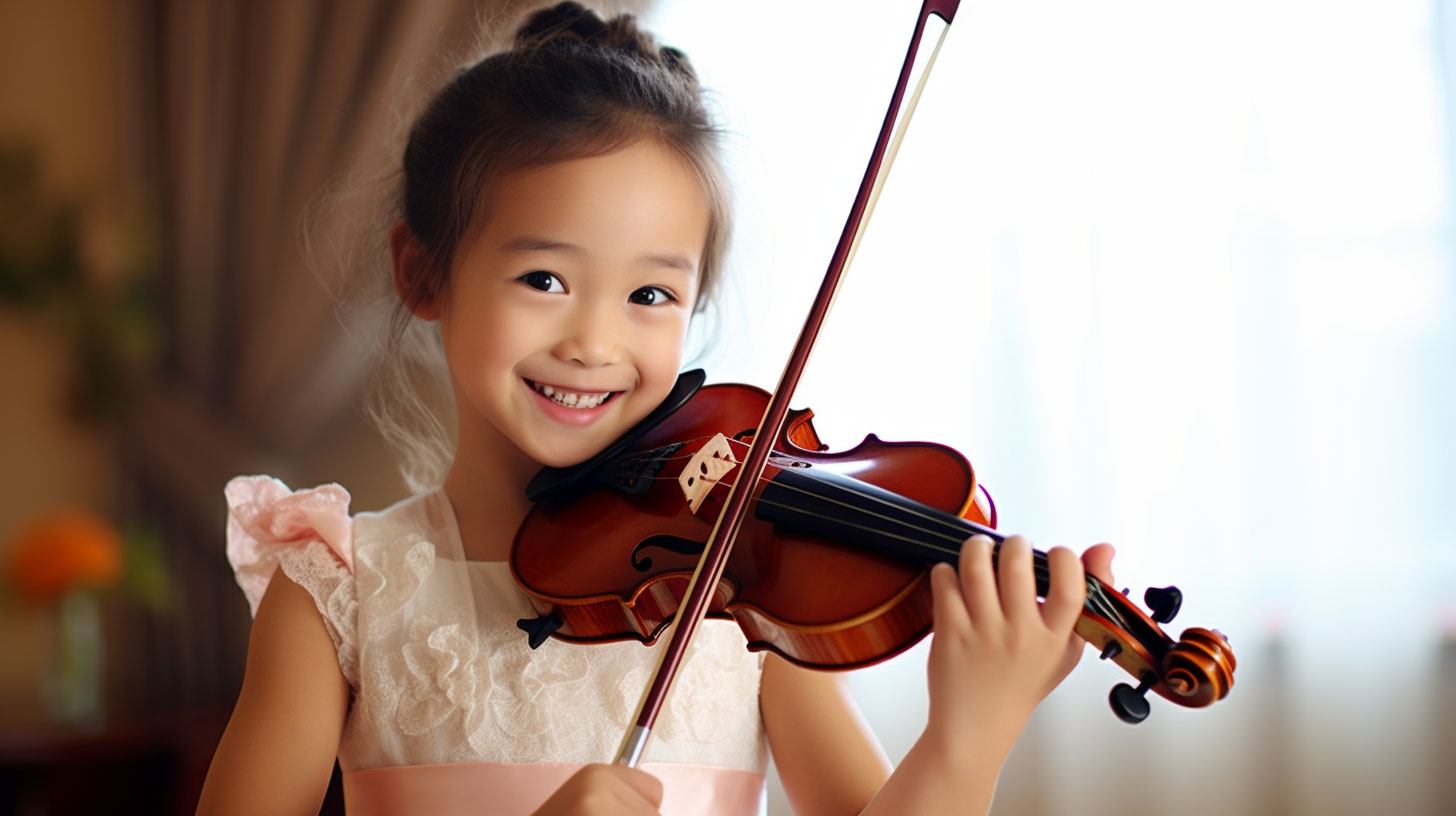
What Does a Violin Tutor Actually Do in the First Month?
A lot of parents imagine that the first month is about playing songs. It is not. A competent tutor spends the first weeks on posture, holding the violin, bow hold, open strings, and basic rhythm. If your child comes home after three lessons playing a tune, that can be nice, but it is not proof that the fundamentals are being built. Ask the tutor directly: what do you plan to cover in the first eight lessons, and what does a good practice week look like at home? A tutor who can answer this in concrete terms is usually a tutor who has taught beginners many times before.
Signs That the Teacher Is Building Fundamentals
Good signs include a consistent warm-up routine, short but specific practice assignments, and a willingness to slow down when something is not working. Be cautious if every lesson ends with a new piece and no review. Progress in violin is cumulative, and skipping review is how bad habits get locked in. If you want a deeper look at what a healthy weekly rhythm looks like, the site has a useful piece on a weekly violin practice routine that works, which many families read alongside their teacher search.
Should You Choose a Chinese Teacher or an Expat Teacher?
This comes up constantly in Beijing. The honest answer is that it depends on your goal and your child's personality. Chinese teachers trained in the conservatory system often bring strong technical discipline, clear standards, and familiarity with ABRSM or Central Conservatory exam requirements. Expat teachers may be more relaxed in communication and sometimes better at keeping very young children engaged through games. Neither approach is automatically better. What matters more is whether the teacher can explain a correction in a way your child understands, and whether the teacher's expectations match your family's schedule.
Language and Communication Style
If your child speaks mostly English at home, a teacher who can switch between Mandarin and English is a real advantage, especially for abstract concepts like intonation and tone production. If your child is preparing for a Chinese exam system, a teacher who knows that system saves you months of guesswork. For families weighing this decision, there is a detailed comparison in how to choose a violin teacher in Beijing that breaks down teaching styles and exam paths without pushing one side.
Where Do You Find Tutors, and How Do You Filter Them?
Most families find tutors through four channels: personal referrals, international school music departments, WeChat parent groups, and online platforms. Referrals are usually the strongest starting point because you can ask specific questions about the teacher's punctuality, communication, and how they handle a child who has not practiced. School music departments often maintain a short list of vetted teachers, though availability may be limited at peak times like September and January.
WeChat groups are hit or miss. Some are genuinely useful; others are full of teachers advertising aggressively. Online platforms make it easy to book a trial lesson, but the quality varies widely, and many listings do not tell you who actually teaches the lesson. Whatever channel you use, always ask for a trial lesson and treat it as a two-way interview, not just a demo.
Questions to Ask Before You Commit
Here is a short list that has saved families a lot of time. How long have you been teaching beginners? Do you follow a method book series, and which one? How do you handle a student who has had a busy week and did not practice? What is your cancellation policy? Do you teach online as well, and if so, what platform do you use? For parents who travel frequently, the last question matters more than it seems, and there is a good overview of online violin lessons for Chinese families abroad that covers the logistics honestly.
How Much Should You Pay, and What Are You Paying For?
As mentioned earlier, 200 to 500 RMB per lesson is the common range for regular teachers, and 500 to 1,200 RMB for highly experienced teachers. Paying more does not automatically mean better teaching, but paying significantly less than the local average often means the teacher is new, overbooked, or teaching out of a shared space with limited time per student. The real question is what you are paying for: lesson time, preparation, feedback, and consistency. A teacher who charges 350 RMB and sends a short voice message after each lesson about what to practice is often worth more than a 600 RMB teacher who disappears between lessons.
Also factor in travel. A 40-minute commute each way to save 50 RMB per lesson is rarely a good trade for a child. Online lessons have changed this calculation, and for adult beginners in particular, they are often the most efficient option. If you are an adult starting late, the site has a practical guide on violin lessons in Beijing for adult beginners that addresses scheduling, instrument choice, and realistic timelines.
What Does a Good Trial Lesson Look Like?
A trial lesson should include three things: a quick assessment of where you or your child currently are, a clear explanation of one technical point, and a specific practice assignment for the coming week. If the lesson is all performance and no diagnosis, that is a warning sign. If the teacher asks about goals, schedule, and previous experience, that is a good sign. After the lesson, give it a day before deciding. The feeling of a lesson can be misleading in the moment, but whether you understood what to do next is a reliable signal.
Red Flags Worth Taking Seriously
Repeated lateness, no clear practice plan, promising exam results, or pressure to prepay a large package are all reasons to slow down. A tutor who is confident in their teaching does not need to lock you in for six months on the first day. On the other hand, a teacher who says openly that progress depends on home practice is usually being honest, not negative.
How Do You Know It Is Working After Three Months?
Look for small, specific changes: steadier bow hold, better rhythm when clapping, fewer stops while playing an open-string piece, and a calmer attitude toward mistakes. If after three months there is no clear routine and no sense of what to practice, the fit is probably wrong, even if the teacher is knowledgeable. Switching teachers is normal and not a failure. The best time to switch is early, before habits become hard to change.
Choosing a violin tutor in Beijing is less about finding the famous name and more about finding someone whose teaching style matches your family's pace, schedule, and goals. Ask direct questions, try a lesson, and judge by whether you leave knowing exactly what to do next. That single criterion filters out most of the noise.
Q: How much do violin lessons cost in Beijing?
A: Regular teachers usually charge 200-500 RMB per 45-minute lesson. Teachers with conservatory training or competition experience often charge 500-1,200 RMB. Group classes typically run 150-300 RMB per session. Online lessons usually cost 20-40 percent less than in-person ones.
Q: Is it better to learn violin online or in person in Beijing?
A: For beginners who need posture correction, in-person lessons are usually easier in the first few months. For adult learners, busy families, or students who already have basics, online lessons can work very well and save commute time. Many teachers now offer both.
Q: How many lessons per week should a beginner have?
A: One lesson per week is standard for beginners. What matters more is practicing five or six days a week for 15-30 minutes. Two lessons a week only helps if the student is actually practicing between them.
Q: Should I choose a Chinese teacher or a foreign teacher?
A: It depends on your goals. Chinese conservatory-trained teachers are often strong on technique and exam systems. Expat teachers may communicate differently and work well with very young children. Language comfort and teaching clarity matter more than nationality.
Q: What should I ask before hiring a violin tutor?
A: Ask about experience with beginners, method books used, how they handle missed practice, cancellation policy, and whether they teach online. Also ask what the first eight lessons will cover. A clear answer is a good sign.
Q: What if the tutor is not a good fit after a few months?
A: Switching is normal. The best time to switch is early, before habits become hard to change. Tell the teacher honestly and start looking again with a clearer idea of what you need. Progress depends more on consistent practice than on loyalty to one teacher.
