Violin Practice Time: How Parents Can Help at Home
Shang Kun 2026-09-27 262
为什么练习时间总变成家里的拉锯战
Violin practice time is where most families quietly fall apart, and it rarely has anything to do with the child's talent. I teach violin in Beijing, mostly online plus a few in-person lessons each week, and after years of watching kids walk in with slumped shoulders I can tell you the same story repeats itself: the kid stalls, the parent pushes, the practice turns into a fifteen-minute argument, and everyone ends the evening tired and a little guilty. The fix is not a longer practice session or a stricter tone. It is usually a structural change in how the parent stands next to the child during that half hour.
Here is the plain truth. A child under ten cannot yet hold the whole plan in their head. They can hold one instruction, maybe two. That job of holding the plan belongs to the adult at home, and it is a skill you can learn in a week or two. This article is only about that one job: what you, the parent, actually do while your kid plays, and what you say when they get stuck.
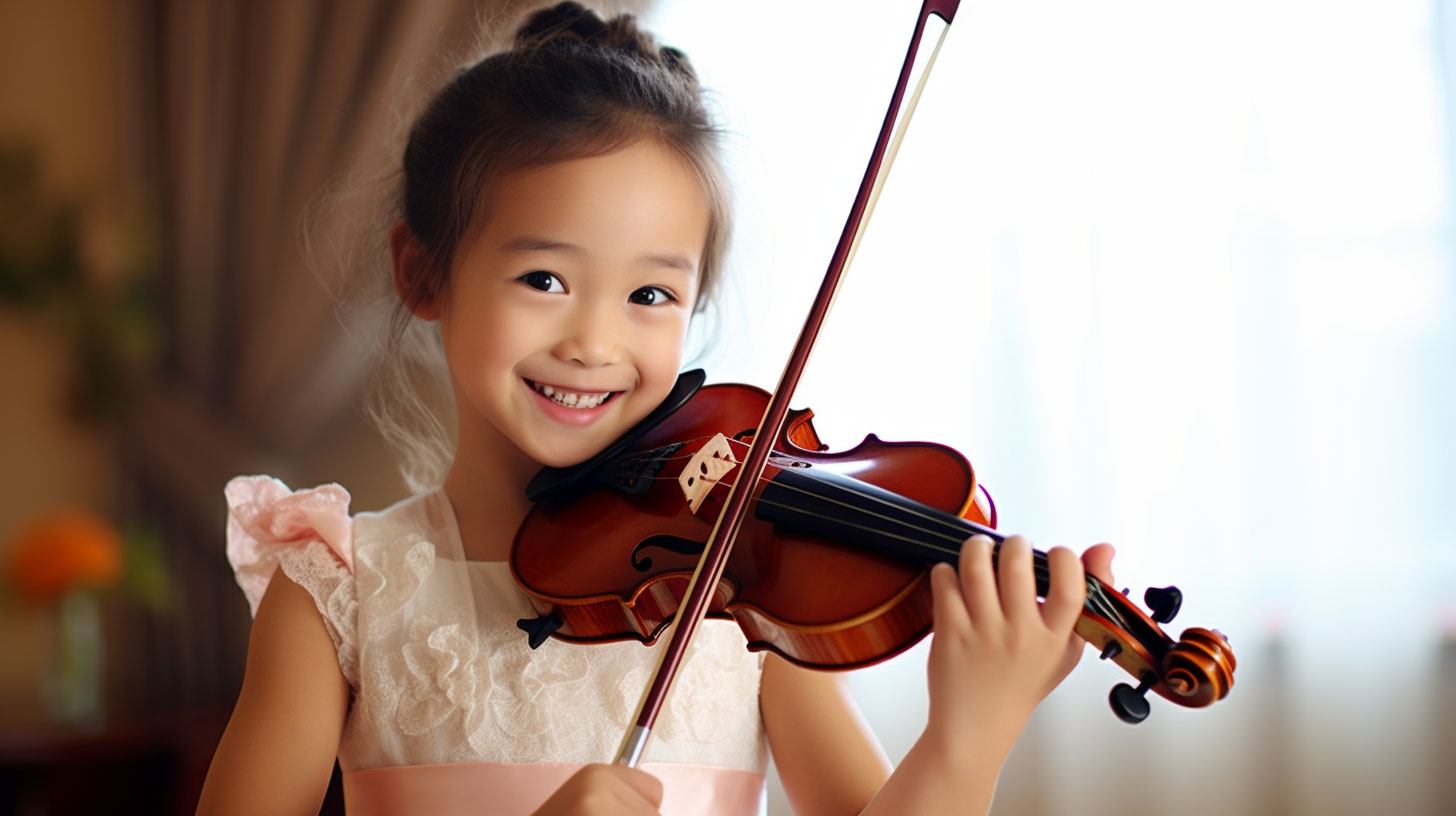
先想清楚:你坐在旁边到底该做什么
Most parents default to two modes, and both backfire. The first is the audience mode: you sit on the sofa, listen, and nod. The kid has no idea whether the intonation is drifting, so nothing changes. The second is the coach mode: you correct every note, and within four minutes the child stops listening to you entirely.
What works is a narrower role. You are the timekeeper and the reminder of one thing. That's it. Before practice starts, you and the child agree on a single focus for that session, such as keeping the left wrist relaxed or not rushing the third bar. During practice you watch for that one thing. Everything else waits for the teacher's lesson.
If you want a deeper look at how those repeated corrections should be organized over weeks instead of minutes, this piece on violin scale practice routines lays out a weekly structure that parents can follow without guessing.
具体怎么分工:一件事、一个信号、一个停顿
Tell the child what the signal is before you start. For example: "If I tap the table, it means your bow is sliding toward the fingerboard." That one agreed signal replaces twenty verbal corrections. When the child hears a tap, they self-correct. When they hear nothing, they keep playing. This is how a kid learns to monitor their own playing instead of waiting for an adult to judge it.
Plan one real pause in the middle. Not a break to check a phone, but two minutes where the child tells you what felt hard. Ask one question: "Which bar annoyed you?" That answer tells you where the next practice should start.
什么时候练、练多久,比练什么更容易吵起来
Parents ask me constantly whether twenty minutes is enough. For a six-year-old beginner, twenty focused minutes is a good day. For a ten-year-old preparing for an ABRSM grade exam, forty to fifty minutes split into two blocks is realistic. The number matters less than the consistency of the time slot.
把练习时间钉在固定的生活节点上
Practice right after breakfast on weekends, or right after the school bag hits the floor on weekdays. Don't negotiate the time. Once the child starts negotiating whether today counts, you have lost the routine, and you'll spend more energy arguing than the practice itself would have taken. I've watched families fix months of daily conflict simply by moving practice from after dinner to before dinner, when the kid is not yet tired.
短时高频比一次性长时间更有效
Ten minutes in the morning on open strings plus twenty in the evening on the current piece beats one forty-minute grind. Younger children especially lose focus after roughly fifteen minutes; pushing past that produces sloppy repetitions that the child then rehearses into habit. Two shorter sessions also mean you can give your full attention twice instead of running out of patience once.
孩子卡在同一个地方时,家长该怎么办
This is the moment most arguments start, and it usually isn't about the note. The child is stuck, they know they're stuck, and an adult repeating "again, again" only confirms that they can't do it. What they need is a smaller step, not more repetition of the same wrong step.
Split the passage. Take the four difficult notes and play them slowly with no rhythm at all, just getting the finger pattern. Then add the bow, one note per bow. Then put it back into the phrase. A beginner who cannot hear that a note is sharp or flat will not fix it by playing louder or faster. Hand them a specific listening task instead, and this guide on fixing intonation problems gives practical ways to do exactly that at home.
用录音代替你的耳朵
Record thirty seconds on your phone, play it back, and let the child listen. Kids accept the phone's judgment far more readily than a parent's. Ask them to name one thing they'd change in the recording, then have them play the passage once more with that change. You say almost nothing. The improvement is still theirs.
情绪崩了就先停,别硬撑
If tears start, stop the session. Not as a reward for crying, and not with a lecture, but simply because a distressed child cannot learn bow control. Say you'll finish the last two minutes after water. This is not failure; it is maintenance. I would rather see a child do fifteen calm minutes than forty minutes ending in resentment.
家长最容易犯的三个错误
错误一:替孩子数拍子数到孩子不听
Counting out loud for a beginner is helpful. Counting over them while they play is not. Once the child can keep a steady pulse, hand the counting to a metronome and stay quiet. Your voice should fade as their internal sense of rhythm grows.
错误二:练新曲子以前没有热身
Skipping warm-up is why the first ten minutes of practice sound bad even on a good day. Two minutes of open strings and a simple scale gets the bow arm working before the hard passage arrives. For a full picture of how to build that into a weekly plan, see this article on reading music for violin beginners, which also covers the warm-up habits that go with it.
错误三:只盯着错的地方
If every comment is a correction, the child learns that practice means being told they are wrong. End each session by having them play something they already do well. That last minute sets how they remember the whole session, and it decides whether tomorrow's practice starts easily or not.
怎么判断练习真的在进步
Parents often can't tell whether the practice is working, and that uncertainty is what makes them push harder. Here's a concrete way to check: pick one bar on Monday and record it. Record the same bar on Friday. If you cannot hear a difference, ask the teacher to listen to both clips rather than guessing. A short weekly log of what was practiced and what changed keeps this honest, and this guide to keeping a violin practice log shows a simple format you can maintain in two minutes a day.
For families in Beijing, a typical beginner lesson runs roughly 200 to 400 RMB for a 45-minute session depending on the teacher's experience and whether it is online or in person. Weekly lessons plus five days of home practice is the usual rhythm that produces steady progress without burning anyone out.
Q: How long should a young beginner practice each day?
A: Fifteen to twenty focused minutes, five days a week, is plenty for a child under eight. Split it into two short blocks if attention fades. Consistency across the week matters more than the length of any single session.
Q: Should parents sit in on every practice session?
A: For beginners, yes, but in a limited role. Be the timekeeper and remind them of one agreed focus. Don't correct every note. As the child gets older and more independent, step back gradually and let them run the session themselves.
Q: What if my child refuses to practice at all?
A: Remove the negotiation. Fix the time slot, keep the first five minutes easy, and end on something they play well. If refusal continues for more than two weeks, bring it to the teacher rather than escalating at home; sometimes the material is simply too hard or too easy.
Q: How do I help if I don't play violin myself?
A: You don't need to. You need to hold the routine, manage the clock, and use recordings and the teacher's notes as your reference. Your job is structure and calm, not technical diagnosis.
Q: Is it bad to practice right before bed?
A: It's workable but not ideal. Most kids are tired by then, and tired practice builds sloppy habits. If bedtime is your only slot, keep it short, slow, and focused on one small passage rather than the whole piece.
Q: How soon should we see improvement?
A: With five days a week, most parents hear a clear change in a specific passage within two to three weeks. Broader tone and intonation improve over months. Record a bar each week so you have something concrete to compare.
