Violin Posture: How to Stand Correctly
Shang Kun 2026-09-23 269
Violin Posture: How to Stand Correctly
Violin posture is the foundation of every clean note you will ever play, and if you are standing wrong, no amount of practice will fix the sound. I have taught violin in Beijing for over fifteen years, and I still see adult beginners and young students making the same standing mistakes in their first month. The good news: fixing how you stand takes about two weeks of daily five-minute checks, not years. This article only deals with one question — how to stand correctly when you play. Nothing about bow hold, nothing about shifting, nothing about rosin. Just your feet, your spine, your shoulders, and your violin angle.
Shang Kun Violin (Beijing) runs both in-person lessons in Chaoyang District and online lessons for students across China and overseas. A private 45-minute lesson in our Beijing studio costs between 300 and 500 RMB, depending on the teacher's experience. Online lessons run 200 to 350 RMB. If standing posture is your main issue, one or two focused lessons usually give you enough to work on for a month. You can also read our violin practice routine for busy adults to see how posture checks fit into a short daily session.
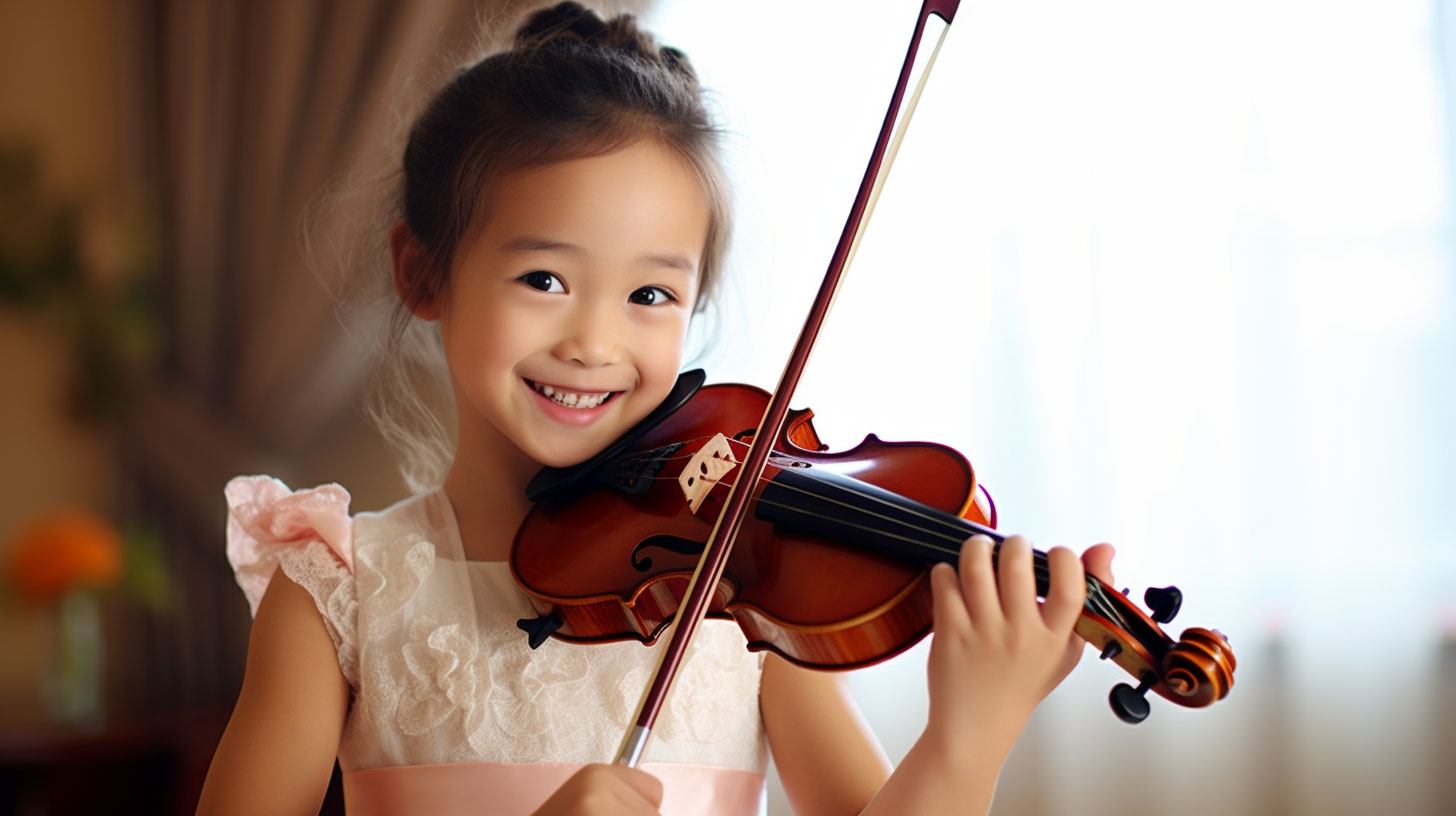
Why Most Players Stand Wrong Without Knowing It
Bad posture does not hurt on day one. It hurts on day three hundred.
When you stand with your weight on one leg, your hips tilt, your spine curves, and your left hand starts gripping the neck to compensate. You will not feel it immediately. You will feel it when you try to play a slow scale and your bow shakes. Or when your shoulder starts aching after twenty minutes. Most students blame their bow arm. The real problem is usually their feet.
Here is a simple test: play an open A string for ten seconds with a slow bow. Then shift all your weight onto your right leg and play it again. Hear the difference? The second one wobbles. That is because your body is now fighting gravity instead of letting the violin sit on your collarbone. Fix the stance and the bow arm relaxes by itself.
Feet: The Part Everyone Ignores
Stand with your feet shoulder-width apart. Not together, not wider than your shoulders. Left foot slightly forward, right foot slightly back — maybe half a foot length. Both feet flat on the floor. No heel lifting, no weight on the toes.
Your weight should be balanced between both feet, slightly toward the balls of your feet. Not on your heels — that pulls you backward. Not on your toes — that tips you forward. Think of standing on a subway train without holding a rail. That is the feeling.
Here is a detail from our Beijing studio: we have a mirror on the wall, and I ask students to stand sideways to it. If the mirror shows their ear, shoulder, hip, and ankle in a roughly straight vertical line, they are standing well. If the line breaks at the hip, they are leaning.
Knees and Hips: Stay Loose
Do not lock your knees. Locked knees push your pelvis forward and make your lower back ache after fifteen minutes. Keep them soft — just barely bent. You should be able to bounce slightly without shifting your feet.
Your hips should be level. If you put your hands on your hip bones, they should feel even. If one side is higher, you are standing on one leg without realizing it. This is the single most common habit I correct in adult beginners.
Shoulders, Neck, and Head Position
Shoulders should be down and slightly back. Not military-stiff, not slumped. Just resting naturally.
Here is a trick that works for almost every student: raise your shoulders up to your ears, hold for three seconds, then let them drop. That dropped position is where they should stay. Do this before every practice session. It takes five seconds and saves your neck.
Your head should be turned slightly to the left, but not cranked. The violin sits on your collarbone, and your jaw rests lightly on the chinrest. If your head is tilted down to hold the violin, the chinrest is in the wrong place or the shoulder rest is too high. Adjust the equipment, not your neck.
The Violin Should Sit on Your Collarbone, Not Your Hand
This is the key sentence in this entire article. The violin is held by your chin and shoulder. Your left hand is not a clamp.
Test it: put the violin in playing position and take your left hand away. The violin should stay there, roughly parallel to the floor. If it drops, your shoulder rest is wrong or your chin is not anchoring properly. In our Beijing lessons, I make students do this test ten times before we play a single note. It feels strange for a week. Then it becomes automatic.
The violin should be roughly horizontal, maybe tilted down a tiny bit toward the scroll. Not pointing at the floor. Not pointing at the ceiling.
How to Check Yourself Without a Teacher
Stand in front of a mirror. Side view. Play a slow G major scale, one octave. Watch for these three things:
One — does your ear stay above your shoulder? If your head drifts forward, you are tensing up.
Two — does your left elbow move freely under the violin? If it is pinned against your body, your shoulder is too high.
Three — do your feet stay still? If your heels lift, your balance is off.
Record a thirty-second video from the side. Watch it at half speed. You will see things a mirror hides. Most students are shocked the first time they do this. I know I was, back when I was a student in Beijing.
If you are working on intonation at the same time, our article on why violin notes drift sharp explains how posture tension directly affects pitch.
Common Mistake: Standing Like a Soldier
Some teachers tell students to stand at attention. That is wrong for violin. A soldier stands with locked knees and a stiff spine. A violinist stands like a tree in light wind — rooted but flexible. Your upper body needs to move slightly with the bow. If you are rigid, your bow changes will sound harsh.
Common Mistake: Looking at Your Fingers
If you tilt your head down to watch your left hand, your neck twists, your shoulder rises, and your bow arm tightens. Learn to feel the string under your fingertip instead of watching it. This feels impossible for the first month. Then it becomes normal.
Posture for Children vs. Adults
A seven-year-old and a forty-year-old need different setups. Not different principles, but different equipment.
For a child, the violin size must be correct. A violin that is too big forces the left arm to reach, which pulls the shoulder up and ruins the stance. We measure arm length in our Beijing studio with a simple rule: place the violin under the chin, extend the left arm, and see if the child's hand can cup the scroll without stretching. If the hand falls short, go down a size. Read our guide on when to move a child to a bigger violin for the exact steps.
For adults, the issue is usually old habits. Many adult beginners sit at a desk all day, so their shoulders are already rounded forward. They need to spend the first month just learning to stand tall again. It is not glamorous work. But it pays off.
Shoulder Rest: Not Optional for Most Players
Some teachers say shoulder rests are unnecessary. For a small number of players with long necks and high shoulders, they may be right. For everyone else, a shoulder rest makes correct posture possible. Without one, the violin slides, and you grip with your left hand to stop it. That ruins everything.
Choose a rest that fills the gap between your collarbone and your jaw. Not too high, not too flat. In our studio, we keep a box of different rests and spend ten minutes finding the right one for each new student. It is the most important ten minutes of the first lesson.
What Happens If You Ignore This
Nothing dramatic. Just slow progress and mild pain.
Your intonation will drift because your left hand is gripping. Your bow tone will be uneven because your shoulder is tense. Your practice sessions will feel harder than they should. And after a few years, you may develop neck or back pain that makes playing unpleasant.
I have seen students quit violin not because they lacked talent, but because they were standing wrong for two years and it hurt. That is a preventable tragedy.
Q: How long does it take to fix violin posture?
A: For most students, two to three weeks of daily five-minute mirror checks. You will feel a difference in sound within the first week. Full automatic habit takes about two months. Do not expect to fix it in one lesson. Posture is a physical habit, not information.
Q: Can I practise violin posture while sitting?
A: Yes, but only if you sit on the edge of a firm chair with both feet flat on the floor. Do not sit back in a soft sofa. Sitting hides balance problems, so I recommend standing for at least the first ten minutes of every practice session.
Q: My shoulder hurts after playing. Is that posture?
A: Usually yes. The most common cause is a shoulder rest that is too high or a left elbow pinned against the body. Check your shoulder rest first. If the pain continues for more than a week, reduce practice time and see a teacher. Do not push through sharp pain.
Q: Does violin posture matter for online lessons?
A: It matters even more. Online teachers cannot walk over and adjust your shoulder. You need a mirror and a camera angle that shows your full body from the side. In our online lessons, we spend the first five minutes on posture every time. It is that important.
Q: What should I wear when practising violin?
A: Clothes that do not restrict your shoulders. A t-shirt is fine. Avoid thick hoodies and heavy jackets — they change the angle of the violin and make the shoulder rest useless. In a Beijing winter, heat your practice room instead of wearing three layers.
Q: How do I know if my violin is too big?
A: Extend your left arm while the violin is under your chin. If your hand cannot comfortably cup the scroll, the violin is too big. For children, this changes every year or two. For adults, a full-size violin is almost always correct, but the shoulder rest and chinrest may still need adjusting.
If you want personal feedback on your standing position, you can book a trial lesson at Shang Kun Violin (Beijing). We teach in person in Chaoyang and online for students in other cities. Bring your violin, wear comfortable clothes, and be ready to stand in front of a mirror. That is the whole first lesson.
Related Reading
Violin Bow Hold: Three Habits to Fix Early — because a tense bow hand often starts with a tense stance.
Violin Scales Practice That Sticks — scales are the best place to test your posture under slow, controlled conditions.
How to Beat Stage Fright Before a Violin Recital — good posture reduces tension, and less tension means less nerves.
Chinese Violin Teacher | Online & Beijing In-Person Lessons — meet our teachers and see how we teach posture from day one.
